
Catalogue de 125 cartes de piratage open-spec – Bien choisir son serveur d impression
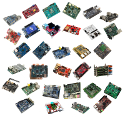 Bienvenue dans notre catalogue de 125 ordinateurs monocarte ouverts, fonctionnant sous Linux et Android, à spécification ouverte. Vous y trouverez des prix et des descriptions mis à jour, ainsi qu'un tableur comparatif des principales caractéristiques.
Les résumés suivants de 125 cartes de piratage Linux / Android de moins de 200 $ et soutenus par la communauté sont répertoriés par ordre alphabétique. Ils énumèrent les spécifications et les prix les plus bas disponibles enregistrés au cours des deux dernières semaines de mai 2019, les produits étant soit expédiés, soit disponibles en précommande avec la date d'expédition prévue pour la fin juin. Une autre façon de parcourir le catalogue consiste à utiliser l'un des liens de la feuille de calcul ci-dessous, qui présente des caractéristiques comparatives. La «nouvelle» icône fait référence aux nouveaux produits inclus depuis notre rafle de 122 panneaux le 3 janvier.
Découvrez également notre introduction couvrant les dernières tendances SBC soutenues par la communauté allant des puces AI à l’impact potentiel des tarifs (voir lien ci-dessous).

- Carte de piratage Arm à faible puissance avec GbE et 160 GPIO
- Entreprise / projet – Olimex, OlinuXino, Mouser
- Page produit
- Processeur – Allwinner A20 (2x Cortex-A7 à 1 GHz); Mali-400 GPU
- Mémoire – 1 Go de RAM DDR3; eMMC 4 Go en option, 8 Go NAND et 16 Go eMMC
- Prix - 50 $ (45 euros); 55 à 60 euros (67 $) pour le poste versions flash
Le projet Olimex OlinuXino, basé en Bulgarie, a été l’une des premières vagues de projets de conseils de piratage informatique aux côtés de BeagelBoard.org, Wandboard.org et de la communauté Raspberry Pi. Son vieillissement A20-OlinuXino-Lime2 offre un Allwinner A20 avec un port Gigabit Ethernet (GbE ou 10/100 / 1000Mbps), un slot microSD, un port HDMI, une interface LCD et des ports 3x USB. Vous bénéficiez également d'un support de batterie et de 160 GPIO. Le format SBC de 84 x 60 mm est disponible avec Android 4.2.2 ou Debian Jessie avec des images principales de Linux 3.4.1.

- Prise en charge de la température industrielle et des modules d'extension d'E / S en option
- Entreprise / projet – Olimex, OlinuXino, Mouser
- Rapport LinuxGizmos
- Page produit
- Processeur – Allwinner A20 (2x Cortex-A7 à 1 GHz); Mali-400 GPU
- Mémoire – 1 Go de RAM DDR3; eMMC 4 Go à 16 Go ou NAND 8 Go en option
- Prix - 56 $ (50 Euros); 60 à 65 euros (73 $) avec ext. flash
Le A20-OlinuXino-Micro, dont le prix a récemment baissé, possède toutes les E / S des modèles Lime de première génération, et ajoute des E / S audio, VGA et une interface LCD avec prise en charge tactile. Cette carte plus grande de 142 x 83 mm offre des connecteurs d’extension avec des modules d’E / S en option. Vous avez le choix entre diverses options de flash et, comme toutes les cartes OlinuXino, une prise en charge optionnelle de -45 à 85 ° C.

- Plus petit et moins riche en fonctionnalités que les autres limes mais avec un quad-core plus rapide Allwinner A33
- Entreprise / projet – Olimex, OlinuXino, Mouser
- Page produit
- Processeur – Allwinner A33 (4x Cortex-A7 à 1,2 GHz); Mali-400 GPU
- Mémoire – 1 Go de RAM DDR3; NAND 8 Go en option
- Prix - 40 $ (36 euros) ou 50 $ (44 euros) pour la version 8 Go
Le A33-OlinuXino de 71 x 66 mm possède un Allwinner A33 quad-core plus rapide par rapport aux cartes OlinuXino antérieures, mais avec un ensemble de fonctionnalités réduit. Les seuls ports du monde réel sont un port OTG mini-USB, des prises audio et une prise 5V. Deux connecteurs non assemblés à 40 broches prennent en charge la technologie GPIO, ainsi que des interfaces LCD 1280 x 800 pixels et deux caméras MIPI-CSI. Vous pouvez télécharger des images pour Android 4.4 et Armbian.

- Premier OLinuXino 64 bits
- Entreprise / projet – Olimex, OlinuXino, Mouser
- Rapport LinuxGizmos
- Page produit
- Processeur – Allwinner A64 (4x Cortex-A53 à 1,2 GHz); GPU Mali-400 MP2
- Mémoire – 1 Go de RAM DDR3 (2 Go sur le modèle temp externe 2G16G-IND); eMMC 4 Go en option (eMMC 16 Go sur le 2G16G-IND)
- Prix - 40 $ (36 Euros); 56 $ (50 euros) pour une mémoire eMMC de 4 Go; 78 $ (70 Euros) pour le 2G16G-IND
Par rapport au début de l’année, toutes les configurations A64-OLinuXino sont désormais en stock et à des prix plus bas. Comme l’ordinateur portable open source (Teres-A64) d’Olimex, le A64-OLinuXino de 90,0 x 62,5 mm exécute Ubuntu / Linaro sur un quad Cortex-A53 Allwinner A64. Le SBC est disponible en trois modèles: une version 1G0G avec 1 Go de RAM sans flash, un 1G4GW avec 1 Go de RAM et 4 Go eMMC et un 2G16G-IND avec 2 Go de RAM, 16 Go eMMC et une prise en charge de -45 à 85 ° C. Le modèle de 4 Go est le seul avec WiFi et Bluetooth. Les trois modèles A64-OLinuXino offrent des connexions GbE, microSD, hôte USB 2.0, micro-USB OTG, HDMI et MIPI-DSI. Il existe également un connecteur GPIO à 40 broches et un RTC avec connecteur de batterie avec prise en charge progressive et en charge.
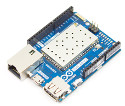
- Redémarrage de la première carte Arduino OpenWrt pilotée par Linux
- Entreprise / projet – Arduino
- Rapport LinuxGizmos
- Page produit
- Processeur – Qualcomm Atheros AR9331 (1x MIPS 24kc à 400 MHz); Atmel ATmega32u4 MCU à 16 MHz
- Mémoire – 64 Mo de RAM; Flash de 16 Mo; Flash de 32 Ko pour MCU
- Prix - 59 $
Juste au moment où nous pensions qu'Arduino avait terminé ses expériences sur Linux, la société est revenue l'an dernier avec un redémarrage de son Arduino Yun d'origine, basé sur MIPS. Il associe de la même manière un SoC AR9331 400 MHz sous WiFi fonctionnant sous OpenWrt Linux avec un MCU ATmega32U qui exécute du code Arduino. La carte est à nouveau équipée d’un slot microSD et de ports hôte USB, micro-USB et Ethernet 10/100. Des améliorations ont été apportées aux composants LAN et USB et vous bénéficiez maintenant de la prise en charge de SSL pour une sécurité renforcée.

- Carte Intel Cherry Trail incroyablement abordable avec bouclier optionnel
- Société / projet – Équipe IoT (DLI)
- Rapport LinuxGizmos
- Page produit
- Processeur – Intel Atom x5-Z8350 (4x Cherry Trail @ 1.92GHz); Intel HD 400 Graphics
- Mémoire – 2 Go de RAM DDR3L; EMMC 16 Go
- Prix - 36 $
 Après le dévoilement par Team IoT en décembre d'un projet de Digital Loggers, Inc., Atomic Pi a été mis en vente ce printemps, s'est rapidement vendu et est maintenant remis en vente chez Ameridroid. Il pourrait aussi bientôt revenir sur Amazon. Incroyablement peu coûteux pour un SBC basé sur Intel – même en tenant compte de sa conception vieillissante du Cherry Trail -, Atomic Pi est une version modifiée du SBC MF-001 d’Aaeon, utilisé par Mayfield Robotics pour son robot Kuri en panne. Selon une critique très négative de Hackaday, il s’agit bien d’une vente d’ancienne action, bien qu’elle puisse prendre un certain temps à 28 000 unités. Le SBC de 130 x 100 x 50 mm – grâce au radiateur – est doté de GbE, WiFi-ac, Bluetooth 4.0, USB 2.0, micro-USB 3.0 OTG et d’un port HDMI uniquement avec sortie audio. Il existe également une unité IMU à 9 axes, une interface de débogage et un connecteur GPIO à 26 broches avec une carte optionnelle à 16 $ montée sur la partie inférieure. Il est préinstallé avec Kubuntu (Linux Kernel 4.15), mais peut également exécuter Windows 10. Bien qu’il n’ait pas été clair au lancement, Atomic Pi est une carte à spécification ouverte.

- Variante de BPI-M2 Ultra de la taille d'une framboise Pi avec SATA natif et prise en charge de la caméra
- Société / projet – SinoVoip
- Rapport LinuxGizmos
- Page produit
- Processeur – Allwinner V40 (4x Cortex-A7); GPU Mali-400 MP2
- Mémoire – 1 Go de RAM DDR3
- Prix - 36 $
Le Banana Pi BPI-M2 Berry est basé sur la conception antérieure de BPI-Ultra et offre de la même manière une prise en charge SATA native. Le Berry a une empreinte plus petite de 85 x 56 mm, semblable à celle de la Raspberry Pi, et un quad différent -A7 Allwinner SoC: l'appareil photo a permis à l'Allwinner V40 de remplacer le R40 presque identique. Le SBC ne dispose pas du stockage eMMC de l’Ultra et offre 1 Go de DDR3 au lieu de 2 Go. Au lieu d’une prise 5V, vous utilisez le micro-USB OTG et vous ne trouvez pas le support de batterie de l’Ultra, IR ou UART de débogage. Par ailleurs, le Berry ajoute un quatrième port hôte USB 2.0 et un connecteur MIPI-CSI. Les autres caractéristiques incluent microSD, WiFi, Bluetooth, GbE, HDMI, MIPI-DSI, E / S audio et un connecteur à 40 broches de type RPi. Cette année, nous semblons avoir perdu l'une des retombées B2: la page AliExpress du Banana Pi BPI-M2 Magic basé sur Allwinner A33 Magic demande uniquement à contacter le fournisseur, mais SinoVoip n'a pas de page d'achat.

- La mise à niveau de BPI-M2 ajoute du SATA natif et 2 Go de RAM
- Société / projet – SinoVoip
- Rapport LinuxGizmos
- Page produit
- Processeur – Allwinner R40 (4x Cortex-A7); GPU Mali-400 MP2
- Mémoire – 2 Go de RAM DDR3; EMMC de 8 Go à 64 Go
- Prix - 56 $
Le Banana Pi BPI-M2 Ultra (BPI-M2U) peut être trouvé à 56 $ sur AliExpress et 79 $ sur Amazon. Il met également à niveau le BPI-M2 de 92 x 60 mm avec un SoC Allwinner R40 plus rapide qui active le connecteur SATA natif de l’Ultra. Vous obtenez 2 Go de RAM, ce qui est inhabituel pour un SoC Cortex-A7. La M2 Ultra est en outre équipée de GbE, WiFi, Bluetooth, d’un hôte 3x USB, ainsi que de ports HDMI et micro-USB OTG uniques. Les autres caractéristiques comprennent un connecteur RPi à 40 broches, MIPI-DSI, une prise audio et une interface micro.

- Pseudo-clone de Raspberry Pi Zero W
- Société / projet – SinoVoip
- Rapport LinuxGizmos
- Page produit
- Processeur – Allwinner H2 + (4x Cortex-A7 à 1,2 GHz); GPU Mali-400 MP2
- Mémoire – 512 Mo de RAM DDR3
- Prix - 22,90 $
Vendue 22,90 $ sur AliExpress, la banane Pi BPI-M2 Zero de 60 x 30 mm imite la Raspberry Pi Zero W, mais son Allwinner H2 + est plus rapide. Le H2 + est comme un Allwinner H3, mais avec HD au lieu du support 4K. L'ensemble des fonctionnalités est presque identique: WiFi, BT, MIPI-CSI, extension à 40 broches, ports mini-HDMI et micro-USB OTG alimentés uniquement. Il existe deux dérivés M2 Zero: le BPI-P2 Zero, qui ajoute 8Mo eMMC et 10/100 Ethernet avec PoE et le BPI-P2 Maker sans eMMC ou WiFi (voir ci-dessous). Ils fonctionnent tous sous Ubuntu 16.04, Raspbian 9.4 et Android. 4.4.

- SBC octa-core 32 bits riche en fonctionnalités avec SATA et prise en charge étendue du système d'exploitation
- Société / projet – SinoVoip
- Page produit
- Processeur – Allwinner A83T (8x Cortex-A7 à 1,8 GHz); GPU PowerVR SGX544MP1
- Mémoire – 2 Go de RAM LPDDR3; EMMC de 8 Go à 64 Go
- Prix - 99 $
Le Banana Pi M3 (BPI-M3) se vend à 99 $ sur Amazon avec des fonctionnalités haut de gamme, à commencer par le SoC octwallon A83T. Le M3 a environ la même taille (92 x 60 mm), la même disposition et les mêmes fonctionnalités que le M2 Ultra et intègre de la même manière une liaison à 40 broches de type Pi. Comme le M2 Ultra, le M3 fournit les options GbE, WiFi, SATA, 3x USB, ainsi que de nombreuses options d'affichage et de caméra. L'assistance logicielle est plus étendue qu'avec certaines autres cartes Banana Pi, bien que toutes se soient améliorées. Les choix incluent Android 5.1, Debian 8, Ubuntu 16.04 Mate, Raspbian Jesse Mate et plus encore.

- Le premier Banana Pi 64 bits offre 2 Go de RAM et une vidéo 4K
- Société / projet – SinoVoip
- Rapport LinuxGizmos
- Page produit
- Processeur – Allwinner A64 (4x Cortex-A53 à 1,2 GHz); GPU Mali-400 MP2
- Mémoire – 2 Go de RAM DDR3; EMMC de 8 Go à 64 Go
- Prix - 52 $
Seul Banana Pi 64 bits de SinoVoip se vend à 52 $ chez AliExpress. Le BPI-M64 fournit des connexions HDMI, MIPI-DSI et -CSI compatibles 4K, ainsi que des connexions sans fil et GbE. La carte de 92 x 60 mm est en outre équipée de 3 ports hôtes USB, d'un port micro-USB OTG et d'un connecteur RPi à 40 broches.
| Banana Pi BPI-P2 Fabricant Zéro / BPI-P2 |
- Spinoffs de RPi Zero W comme BPI-M2-Zero avec Ethernet compatible PoE
- Société / projet – SinoVoip
- Rapport LinuxGizmos
- Page produit
- Processeur – Allwinner H2 + (4x Cortex-A7 à 1,2 GHz); GPU Mali-400 MP2
- Mémoire – 512 Mo de RAM DDR3; EMMC 8 Go (non disponible sur Maker)
- Prix - 34 $ pour zéro (40 $ avec PoE); 13,60 $ pour Maker (18,70 $ avec PoE)
Le BPI-P2 Zero, qui est également disponible dans une version sans WiFi / BT ou eMMC appelée BPI-P2 Maker, a été annoncé en août dernier et a commencé à être livré plus tôt cette année. La page AliExpress indique que l’article n’est plus disponible (pour 28 USD) et que la seule autre page d'achat que nous avons vue était sur eBay (34 USD), plus 6 USD pour l'option PoE. Cela suggère que le zéro pourrait bientôt disparaître. La version allégée de BPI-P2 Maker, cependant, se vend 13,60 $ sur AliExpress, ou 18,70 $ avec PoE. Sinon, les fonctionnalités et le support logiciel sont identiques à ceux de M2-Zero, qui est lui-même un pseudo-clone du RPi Zero W. Le SBC Banana Pi BPI-R64 annoncé en même temps que le P2-Zero pas atteint le marché.

- La carte routeur offre 4x ports GbE, jusqu'à 2x SATA et mini-PCIe 2.0
- Société / projet – SinoVoip
- Rapport LinuxGizmos
- Page produit
- Processeur – MediaTek MT7623N (4x Cortex-A7 à 1,3 GHz); GPU Mali-450 MP4
- Mémoire – 2 Go de RAM DDR3; EMMC 8 Go
- Prix - 89,50 $
La suite de BPI-R2 à la populaire carte de routeur BPI-R1 a été annoncée il y a un an et est actuellement disponible au prix de 89,50 $ chez AliExpress. Comme le R1, le R2 offre des ports 4x GbE et un port WAN, ainsi que des sorties HDMI 1.4 et MIPI-DSI. Le R2 est doté d'un processeur SoC quadrichy A7 MediaTek MT7623N plus rapide et plus performant sur le réseau, de davantage de RAM et de stockage, ainsi que de l'option d'une seconde interface SATA III. Il ajoute également les technologies Bluetooth, mini-PCIe, GPIO à 40 broches et une prise en charge USB améliorée: 2x hôte USB 3.0 et un OTG micro-USB 2.0. La prochaine Banana Pi BPI-R64 ne sera pas clairement mise à niveau. Il offre un SoC MT7622 basé sur le Cortex-A53 plus intuitif au réseau, mais il n’ya pas de GPU et seulement deux cœurs de processeur. Le BPI-R64 n'aura pas de sorties vidéo et est limité à 1 Go de RAM et à des connexions USB et SATA simples. Le BPI-R64 aura les mêmes dimensions de 148 x 100,5 mm que le R1 et le R2 et la plupart des mêmes caractéristiques du R2.

- Carte routeur avec double SATA III, double GbE et triple M.2
- Société / projet – SinoVoip
- Rapport LinuxGizmos
- Page produit
- Processeur – Realtek RTD1296 (4x Cortex-A53 @ jusqu'à 1,5 GHz); GPU MP3 Mali-T820
- Mémoire – 2 Go de RAM DDR4; EMMC de 8 Go à 64 Go
- Prix - 88 $
Le routeur et la carte NAS BPI-W2, qui se vend à un prix minimum de 88 USD sur AliExpress, est une retombée des cartes BPI-R1 et R2. Les 148 x 100,5 mm fournissent un port double SATA III, double GbE et WAN. Vous obtenez également 4x USB, y compris les ports de type C et 3.0. Pour l’extension, il existe 3 emplacements M.2 avec prise en charge PCIe et un emplacement pour carte SIM, ainsi qu’un GPIO à 40 broches. Contrairement à la plupart des cartes réseau, le BPI-W2 peut également l’apporter en matière de multimédia: vous obtenez des entrées et sorties HDMI, un mini-DP et une prise audio. Le BPI-W2 exécute Android 6.0, CentOS, Debian 9, Raspbian, Ubuntu 15.04 ou OpenWrt sur le Realtek RTD1296, une variante du RTD1295 orientée NAS dotée d’un puissant processeur graphique MP3 Mali-T820. En février, SinoVoip a annoncé un Banana Pi BPI-M4 avec un quad -53 Realtek RTD1395, mais il n’a pas encore été commercialisé.
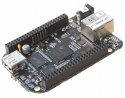
- La légende de l'open source se concentre sur les entrées / sorties industrielles
- Société / projet – BeagleBoard.org
- Rapport LinuxGizmos
- Page produit
- Processeur – TI Sitara AM3358 (1x Cortex-A8 à 1 GHz) avec puces PRU MCU; GPU PowerVR SGX530
- Mémoire – 512 Mo de RAM; EMMC 4 Go
- Prix - 54 $
Le BeagleBone Black Rev C de Revian, orienté aux industries, se distingue par ses nombreuses interfaces d’extension et ses microcontrôleurs «PRU» programmables, ainsi que par sa communauté profondément enracinée, BeagleBoard.org. Ce tableau de hacker légendaire est actuellement disponible pour un minimum de 54 $ chez Element14. Le BB Black a été suivi par un plus grand nombre de clones riches en fonctionnalités et / ou à moindre coût, et il sera bientôt éclipsé par une IA BeagleBone d’environ 100 $. Le prochain modèle d'IA comprend un processeur sur puce double AM629 Cortex-A15 TI avec prise en charge de l'IA via deux processeurs DSP C66x et 4x cœurs «EVE», ainsi que 1 Go de RAM, 16 Go eMMC, WiFi et GbE. Plus bas, consultez deux modèles BeagleBone Green de Seeed, ainsi que les modèles BeagleBone Black Wireless, BeagleBone Blue et le nouveau PocketBeagle de BeagleBoard.org. Le BeagleBone Black Industrial 4G d’Elément14, identique au BB Black à l’exception de son revêtement conforme et de son support de -20 à 85 ° C, se vend à 88,26 $ chez AliExpress.
| BeagleBone Black Wireless |

- Suite BeagleBone Black avec SiP avec sans fil et HDMI, mais pas Ethernet
- Société / projet – BeagleBoard.org; Systèmes Octavo
- Rapport LinuxGizmos
- Page produit
- Processeur – Systèmes Octavo OSD3358 SiP avec TI Sitara AM3358 (1x Cortex-A8 à 1 GHz) avec MCU PRU; GPU PowerVR SGX530
- Mémoire – 512 Mo de RAM; EMMC 4 Go
- Prix - 65 $
L’alternative de BeagleBoard.org à BeagleBone Green Wireless de Seeed est vendue au prix de 65 $ sur Arrow. Comme le BB Green Wireless, le SBC ajoute la technologie 2.4 GHz 802.11a / b / g / n et Bluetooth 4.1 BLE au design BeagleBone Black. Contrairement aux deux modèles BB Green de Seeed, le BeagleBone Black Wireless conserve le port micro-HDMI du BB Black, mais supprime le port Ethernet. Il est par ailleurs identique au BB Black à une exception près: il intègre le module OSD3358 SiP (système dans le package) d’Octavo Systems, qui a également construit le SBC. Octavo vend un BeagleBone OSD3358-SM-RED plus avancé compatible avec le même paquet SiP (voir plus loin).

- BeagleBone axé sur la robotique et la STEM avec servos, capteurs et alimentation à plage étendue
- Société / projet – BeagleBoard.org
- Rapport LinuxGizmos
- Page produit
- Processeur – Octavo Systems OSD3358 SiP avec TI Sitara AM3358 (1x Cortex-A8 à 1 GHz) avec puces PRU MCU et processeur graphique PowerVR SGX530
- Mémoire – 512 Mo de RAM; EMMC 4 Go
- Prix - 68 $
Cette collaboration de BeagleBoard.org axée sur la robotique et axée sur l’éducation avec le laboratoire de robotique coordonnée de l’UCSD est un clone de BeagleBone qui ajoute un contrôle des mouvements et une alimentation compatible avec les piles. The Blue a chuté à un nouveau creux de 68 $ chez Arrow. A l'instar du BeagleBone Black Wireless, le BeagleBone Blue intègre un TI WiLink 8 avec WiFi et Bluetooth 4.1 LE, ainsi qu'un module Octavo Systems OSD3358 SiP qui encapsule le SoC Sitara AM3358, la RAM et le flash, ainsi qu'un PMIC et d'autres fonctions. Il n’ya pas de port Ethernet ni d’interface d’affichage, mais vous disposez de ports client et hôte micro-USB 2.0, de 8 sorties servo, de sorties moteur 4x CC et d’entrées de codeur 4x quad. Les autres caractéristiques comprennent une unité IMU, un baromètre, JTAG, GPS et une radio DSM2. Vous disposez également d’une entrée CC 9-18 V, d’un connecteur de batterie LiPo, de boutons d’utilisateur et de voyants supplémentaires, ainsi que de la liste complète habituelle d’interfaces BB Black. La prise en charge de Distro inclut la pile Debian améliorée par défaut de BeagleBone, ainsi que Ubuntu Core, ROS et ArduPilot.

- Clone BeagleBone axé sur l'IoT avec prise en charge du capteur Grove
- Société / projet – Vu; BeagleBoard.org
- Rapport LinuxGizmos
- Page produit
- Processeur – TI Sitara AM3358 (1x Cortex-A8 à 1 GHz) avec puces PRU MCU; GPU PowerVR SGX530
- Mémoire – 512 Mo de RAM; EMMC 4 Go
- Prix - 44 $
Le re-spin du BeagleBone Black approuvé par BeagleBoard.org et axé sur l'IdO ne dispose pas du port micro-HDMI et de la prise jack 5 V du BB Black, mais il coûte moins cher et ajoute des connecteurs d'extension pour les capteurs Grove de Seeed. Il remplace également le port mini-USB par un micro-USB.
| BeagleBone Green Sans Fil |

- Version sans fil de BeagleBone Green avec 4x ports hôtes USB
- Société / projet – SeeedStudio; BeagleBoard.org
- Rapport LinuxGizmos
- Page produit
- Processeur – TI Sitara AM3358 (1x Cortex-A8 à 1 GHz) avec puces PRU MCU; GPU PowerVR SGX530
- Mémoire – 512 Mo de RAM; EMMC 4 Go
- Prix - 52,90 $
Le BeagleBone Green Wireless possède les mêmes fonctionnalités de base que le BeagleBone Green, avec des additions et des soustractions identiques à celles du BB Black, y compris l’ajout d’une interface Grove. Le modèle sans fil ajoute WiFi et Bluetooth, ainsi que trois ports hôtes USB supplémentaires pour un total de quatre, ce qui en fait le leader USB parmi tous les clones BB Black. Un module TI WiLink8 est désormais standard, renforçant les capacités sans fil de Bluetooth 4.1 LE et 802.11a / b / g / n à 2,4 GHz avec 2 × 2 MIMO.
| Carte de développement Linux C-SKY |

- Le tableau IoT à faible coût présente SoC avec le nouveau C-SKY ISA
- Entreprise / projet – Hangzhou C-SKY via Maker go
- Rapport LinuxGizmos
- Page produit
- Processeur – Nationalchip GX6605S CK610M (1x C-SKY à 574 MHz)
- Mémoire – 64 Mo de RAM DDR2
- Prix - 15,90 $
Essayer le nouveau C-SKY ISA lancé en Chine par Hangzhou C-SKY ne coûte pas cher. Nous ne retrouvons plus la carte de développement Linux C-SKY de la société, qui lance le SoC Nationalchip GX6605S sur Taobao pour 6 dollars, mais nous l’avons vu à 15,90 dollars sur Tindie (de Maker go) et entre 18 et 20 dollars sur AliExpress (de Vector Trading Company) ). La carte de développement C-SKY est prise en charge avec une pile Linux 4.16 avec Buildroot et uClibc-NG, et est livrée avec des schémas. Le SBC est un peu plus petit qu'un Raspberry Pi et offre un port HDMI compatible HD et deux ports USB 2.0. L'un des deux ports micro-USB prend en charge le débogage JTAG et l'autre offre une alimentation 5V / 1A avec console UART. Une embase à 5 broches alimente et 3x GPIO. Vous obtenez un bouton de réinitialisation, ainsi que plusieurs boutons et voyants utilisateur.

- Carte CE 96Boards à sécurité renforcée avec SoC FPGA Cyclone V SE et vidéo double flux
- Entreprise / projet – Novtech, Arrow, RocketBoards.org
- Rapport LinuxGizmos
- Page produit
- Processeur: processeur Intel Cyclone V SE (2x Cortex-A9); Cyclone V FPGA avec 110K LEs
- Mémoire – 512 Mo ou 1 Go de RAM DDR3
- Prix - 155,35 $
Le Chameleon96 SBC 96Boards CE compatible de Novtech est disponible au prix de 155 $ chez Arrow, contre 129 $ il ya un an. La toute première entrée 96Boards basée sur FPGA exécute Debian sur un SoC ARM / FPGA Cyclone V SE. Le Chameleon96 est doté de la sécurité de SecureRF, ainsi que de la suite vidéo Intel pour la technologie FPGA. Le FPGA peut diffuser de la vidéo 1080p à 60 images par seconde via le port HDMI et encoder une vidéo similaire via une interface de caméra MIPI-CSI à deux voies. Les autres caractéristiques comprennent un slot microSD, un port micro-USB OTG, deux ports hôtes USB 2.0, une interface audio, un USB Blaster et un UART. Comme la plupart des SBC 96Boards, ce SBC 12V offre le WiFi et le Bluetooth, mais manque d'Ethernet. Il offre les connecteurs d’entrée / sortie 96Boards habituels à basse et haute vitesse.

- Kit avec carte ARM9 IoT miniature et support pour les modules LittleBits
- Entreprise / projet – LittleBits Electronics
- Rapport LinuxGizmos
- Page produit
- Processeur – NXP i.MX233 (1x ARM9 à 454 MHz)
- Mémoire – 64 Mo de RAM; Carte microSD de 4 Go
- Prix - 60 $
La seule carte Linux de la plate-forme de création LittleBits orientée Arduino est l’un des plus petits SBC du monde, avec une taille de 15 x 10 mm. La carte intègre le WiFi, un port micro-USB à alimentation uniquement et deux connecteurs «BitSnap» permettant l’ajout de modules LittleBits standard. Le CloudBit est vendu chez LittleBits, mais un kit de démarrage Cloudbit proposant le CloudBit avec cinq modules de prototypage est disponible ailleurs, au prix le plus bas chez Walmart à 60 $. La plate-forme Arch Linux prend en charge les scripts IFTTT et se connecte à une plate-forme cloud orientée Node.js conçue pour la surveillance des gizmos IoT. C’est la seule carte de notre collection avec un SoC exécutant la vénérable architecture ARM9.
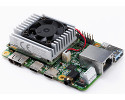
- La première carte hacker Linux de Google associe un i.MX8M à sa puce Edge TPU pour IA.
- Société / projet – Google
- Rapport LinuxGizmos
- Page produit
- Processeur – NXP i.MX8M (4x Cortex-A53 à 1,5 GHz) avec processeur graphique Vivante GC7000Lite / GC7000VLX et MCU Cortex-M4 à 266 MHz; Puce Edge TPU
- Mémoire – 1 Go de RAM LPDDR4; EMMC 8 Go
- Prix - 150 $
La Coral Dev Board de Google, de type sandwich, exécute une distribution Linux Mendel basée sur Debian sur un module SOM Coral de 48 x 40 mm équipé de i.MX8M de NXP. Le module présente la puce Edge TPU de Google, une version simplifiée de l’unité TPU de Google destinée à accélérer les modèles AI TensorFlow Lite. Le TPU Edge, qui figure également sur une clé USB et une carte PCI de marque Coral, est sauvegardé par une pile Cloud Edge IoT pour le traitement et l'analyse de bord IoT intégrés au cloud. Le Coral SOM propose une mémoire eMMC de 8 Go et une RAM assez faible, ainsi qu’une puce de cryptage et une bande double bande 802.11b / g / n / ac avec BT 4.1 BLE. La carte Coral Dev Board tolérante de 0 à 50 ° C a une taille et une disposition similaires à celle de Raspberry Pi et offre un connecteur GPIO à 40 broches. Les ports incluent GbE, USB 3.0, USB Type-C OTG, alimentation USB Type-C 5V et une console micro-USB. Media I / O comprend un [email protected] Port HDMI 2.0a, interfaces MIPI-DSI et -CSI à 4 voies, ainsi que connexions jack audio et micro / haut-parleur. Asus prépare ses propres cartes de piratage basées sur la Coral SOM. Le futur Tinker Edge T et le plus industriel CR1S-CM-A sont basés sur le Conseil de développement Coral.

- Une version turbo du CubieAIO-A20 qui passe en quad -A53 Actions S700
- Société / projet – CubieBoard.org, CubieTech Limited
- Rapport LinuxGizmos
- Page produit
- Processeur – CubieTech Actions S700 (4x Cortex-A53); GPU Mali-450 MP4
- Mémoire – 2 Go de RAM LPDDR3; EMMC 8 Go
- Prix - 139 $
La CubieAIO-S700 de type sandwich comprend le quadri-A53 Actions S700 via le module Einstein-S700 de CubieTech, qui intègre une puce Ampak AP6212 avec WiFi-ac et BT 4.0. Outre les différents modules de processeur Einstein, la carte correspond très bien aux caractéristiques et à la présentation de la CubieAIO-A20 basée sur l'Allwinner A20, désormais disponible uniquement avec un écran tactile à 127,90 $. Le CubieAIO-S700 de 170 x 106 mm a un profil haut de 20 mm en raison de ses ports hôtes USB 2.0 multipliés par 6. Le port HDMI est supérieur à la résolution HD, mais vous disposez d'un port GbE, d'un audio SPDIF, de deux ports série côtiers, d'un logement pour carte SIM et de deux logements pour cartes mini-PCIe, dont l'un est doté de la technologie mSATA non native. Le CubieAIO-S700 dispose également d’un collecteur d’extension à 54 broches, RTC, IR, etc. Le kit complet CubieAIO-S700 commence à 139 $ chez AliExpress. Il existe également une page de produit pour un SBC CubieAIO-S500 apparemment parallèle qui est presque identique au CubieAIO-S700 mais comporte un module Einstein S500 avec un SoC quad -A9 Actions S500.

- Carte A15 octa-core riche en fonctionnalités avec de multiples options de stockage
- Société / projet – CubieBoard.org, CubieTech Limited
- Rapport LinuxGizmos
- Page produit
- Processeur – Allwinner A80 (4x Cortex-A15 @ jusqu'à 2 GHz, 4x Cortex-A7 @ jusqu'à 1,3 GHz); GPU PowerVR G6230
- Mémoire – 2 Go de RAM DDR3; EMMC de 8 Go, extensible jusqu'à 64 Go
- Prix - 117 $
Le CubieBoard4 est équipé d'un SoC Allwinner A80 octa-core avec un GPU PowerVR G6230 à 64 coeurs. Le SBC de 111 x 111 mm offre les ports WiFi, Bluetooth et GbE, ainsi que les ports VGA, HDMI, USB 3.0 et 4x USB 2.0. Il existe également un connecteur d’extension à 54 broches. Le SBC propose des configurations optionnelles comprenant deux emplacements microSD ou un mélange de microSD et de flash intégré. Il existe de nombreux cas et autres add-ons, ainsi que des images pour Debian, Ubuntu et Android, avec prise en charge de Linux principale. La carte coûte 117 $ sur AliExpress et 129,90 $ sur Amazon.
| CubieBoard5 (CubieTruck-Plus) |
- Carte Octa-core -A7 avec support SATA et double affichage
- Société / projet – CubieBoard.org, CubieTech Limited
- Page produit
- Processeur – Allwinner H8 (8x Cortex-A7 @ jusqu'à 2 GHz); GPU PowerVR SGX544 @ jusqu'à 700 MHz
- Mémoire – 2 Go de RAM DDR3
- Prix - 109 $
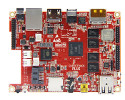
Le CubieBoard5, qui se vend 109 $ chez Amazon, présente un Allwinner H8 avec huit cœurs Cortex-A7. Le SBC fournit un stockage microSD et SATA, avec une carte optionnelle RAID supplémentaire. Pour la connectivité, vous disposez du WiFi, du Bluetooth 4.0 et d’un port GbE. La prise en charge du double affichage est disponible via HDMI et DisplayPorts. La carte est en outre équipée d'une paire de ports hôtes USB, d'un capteur infrarouge, d'un signal audio SPDIF et d'une batterie au lithium en option.
| CubieBoard6 / CubieBoard7 |

- Cousins monolithiques aux planches de style sandwich CubieAIO avec SATA et USB 3.0 plus rapides
- Société / projet – CubieBoard.org, CubieTech Limited
- Rapport LinuxGizmos
- Page produit
- Processeur – CubieBoard6: Actions CubieTech S500 (4x Cortex-A9 à 1,2 GHz, GPU PowerVR SGX544); CubieBoard7: CubieTech Actions S700 (4x Cortex-A53, GPU Mali-450 MP4)
- Mémoire – 2 Go de RAM LPDDR3; EMMC 8 Go
- Prix - 89 $ (CubieBoard6); 99 $ (CubieBoard7)
Les SBC CubieBoard6 et CubieBoard7, qui sont identiques à l'exception de leurs processeurs, sont les cousins SBC entièrement intégrés aux cubieAIO-S500 et CubieAIO-S700 de style sandwich, respectivement. Ces mises à jour de CubieBoard2, vieux de quatre ans, ont des empreintes de pas plus petites de 100 x 60 mm par rapport aux cartes CubieAIO, ainsi qu’un ensemble de fonctionnalités réduit. En plus de leurs prix plus bas, l’avantage principal réside dans le fait que leurs ports SATA non natifs se greffent sur une connexion USB 3.0 plus rapide pour offrir une approximation de SATA III. Les cartes fournissent 10/100 Ethernet, 802.11n et BT 4.0, ainsi que deux ports hôtes USB 2.0 et un port mini-USB. Les autres caractéristiques incluent une prise HDMI prête à l'emploi, des prises audio, une RTC, une IR, un en-tête UART et deux en-têtes GPIO à 48 broches. Comme les cartes CubieAIO, elles sont prises en charge avec les versions Android 5.1.1 et Debian optimisées pour les actions. Le CubieBoard6 se vend à 89 $ et le CubieBoard7 à 99 $, les deux chez AliExpress. L'année dernière, CubieTech a publié une page de produit pour un remplacement de CubieBoard9 basé sur un quad-A53 Actions S900 pour le CubieBoard4, mais il n'a pas encore été commercialisé.
| Kit de développement DE0-Nano-SoC |

- Carte de développement avec prise en charge du SoC FPGA Cyclone V SE et du bouclier Arduino
- Société / projet – Terasic; RocketBoards.org
- Page produit
- Processeur – Intel Cyclone V SE (Cyclone V FPGA + 2x Cortex-A9 à 952 MHz)
- Mémoire – 1 Go de RAM DDR3
- Prix - 99 $
Le kit de développement DE0-Nano-SoC ressemble à un tableau de développement commercial, mais il offre des spécifications ouvertes et est pris en charge sur le site de la communauté RocketBoards.org. Le DE0-Nano-SoC utilise la variété SE bas de gamme du SoC Cyclone V d’Intel, qui est à peu près équivalente à un Xilinx Zynq-7020. Le SoC combine de la même manière un circuit FPGA avec deux cœurs Cortex-A9 sous Angstrom v2014.12 Yocto 1.7 avec un noyau Linux 4.0. La carte est dotée de ports GbE, USB OTG et micro-USB, ainsi que d’un port microSD avec une carte de données de 4 Go. Il existe également un accéléromètre, un connecteur d'extension armé et diverses interfaces liées au FPGA, notamment un connecteur à 40 broches et un connecteur blindé Arduino.

- Société / projet – Arrow; Qualcomm
- Le panneau CE 96Boards Original reprend sa production complète
- Couverture LinuxGizmos
- Page produit
- Processeur – Snapdragon 410 (4x Cortex-A53 à 1,2 GHz); Adreno 306 GPU
- Mémoire – 1 Go de RAM LPDDR3; EMMC 8 Go
- Prix - 75 $
Le DragonBoard 410c, soutenu par Qualcomm, et la HiKey, aujourd'hui disparue, étaient les premiers SBC 96Boards Consumer Edition (CE), ainsi que les premiers SBC de hacker ARM 64 bits. Le SBC piloté par Snapdragon 410 de 85 x 54 mm ne possède pas de port Ethernet, mais vous disposez des connexions WiFi, Bluetooth, GPS, HDMI, microSD, 3x USB et des connecteurs 96Boards à 40 et 60 broches. SBC prend en charge Android 5.1, Debian 8.0 et Windows 10 IoT Core. SBC Extended Extended SBC, basé sur le Snapdragon 820E haut de gamme d’Arrow, a quant à lui disparu, du moins temporairement. Plus tôt cette année, Arrow a annoncé la création de trois SBC Extended CE 96Boards CE qui n’ont pas encore été commercialisés. Il s’agit notamment de l’Avenger96 équipé des nouveaux SoC STM32MP1 hybrides Cortex -A7 / M4 de ST, ainsi que des cartes AI-ML et Thor96, qui exécutent Linux sur les SoC i.MX8X et i.MX8M de NXP, respectivement. ST prépare ses propres cartes de développement à faible coût, et éventuellement à spécifications ouvertes, pour le STM32MP1, y compris le STM32MP157A-DK1 à 69 $.

- Cette vitrine 96Boards à base de bras pour le TPU BM1880 de Bitmain pour l’IA dispose d’un MCU RISC-V
- Entreprise / projet – Bitmain
- Rapport LinuxGizmos
- Page produit
- Processeur – Bitmain Sophon BM1880 (TPU BM1880 avec une puce 2x Cortex-A53 à 1,5 GHz et 750 MHz RISC-V
- Mémoire – 1 Go LPDDR4; 8Mo eMMC
- Prix - 129 $
Vers la fin de l’année dernière, Bitmain, connu pour ses systèmes d’extraction de bitcoins, a lancé un SBC à spécifications ouvertes et compatible 96Boards CE pour présenter son 1-TOP «BM1880 TPU» destiné aux applications d’apprentissage en profondeur. La page d'achat de 129 $ du conseil indique que le conseil est "à venir", avec un changement de nom du nom de la carte mère Sophon BM1880 EDB (Sophon Edge) d'origine à la carte de développement TPU Edge. Presque aussi déroutant que le nom – pour autant que nous sachions, cela n’a rien à voir avec la puce Edge TPU AI de Google -, le panneau semble déjà livré, à en juger par cette annonce sur eBay qui le vend dans un état "neuf" pour 199 $ gonflés. Le TPU du BM1180 SoC est accompagné de deux cœurs Cortex-A53 sous Linux, ainsi que d’un MCU compagnon RISC-V. Bien que cette carte de taille Raspberry Pi sans tête ne propose que le connecteur à 40 broches 96Boards, pas l'interface à 60 broches, 96Boards.org la répertorie comme une offre officielle de 96Boards. Les modules complémentaires Raspberry Pi et Arduino sont facultatifs. Les autres fonctionnalités incluent GbE, débogage UART micro-USB et 3 ports USB 3.0 hôte / OTG. Vous obtenez également un slot microSD, JTAG et WiFi / BT basé sur USB.

- Carte riche en fonctionnalités de type sandwich avec le SoC Rockchip vieillissant
- Société / projet – Firefly
- Page produit
- Processeur – Rockchip RK3128 (4x Cortex-A7 à 1,3 GHz); GPU Mali-400 MP2
- Mémoire – 1 Go de RAM; Flash NAND de 8 Go
- Prix - 60 $
Ce panneau Firefly bas de gamme est disponible depuis longtemps à un prix promotionnel de 60 $. La Firefly-RK3128 prend en charge Android 5.1 et Ubuntu 15.04 sur un Rockchip A7 quad-core cadencé plus lentement que le RK3288 et offrant la moitié de la mémoire vive et du flash du Firefly-RK3288. Le périphérique COM / carte de base de type sandwich inclut les technologies GbE, WiFi, BT, HDMI, MIPI-DSI, MIPI-CSI, SPDIF, audio analogique, LVDS, IR et CVBS. The 117 x 85mm board is further equipped with 4x USB host ports, a micro-USB OTG port, and dual 42-pin expansion connectors. A year ago, Firefly introduced a similar, but extended temp SBC called the Firefly-PX3-SE. However, this sandwich-style board with a Core-PX3-SEJ module featuring a quad -A7 Rockchip PX3-SE is out of stock, and Firefly has yet to post any schematics or other open source resources, so we’ve removed it. Resources for Firefly’s other open source boards may be found on the download page.
- Quad -A17 board with onboard wireless and 4K-ready HDMI 2.0
- Company/project — Firefly
- Product page
- Processor — Rockchip RK3288 (4x Cortex-A17 @ 1.8GHz); Mali-T760 GPU
- Memory — 2GB or 4GB DDR3 RAM; 16GB or 32GB eMMC
- Price — $119 (2GB/16GB); $189 (4GB/32GB)
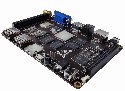
Starting at $119, this 118 x 85mm SBC dual boots Ubuntu 14.04 and Android 4.4 with mainline Linux 4.4 support on a 1.8GHz, quad -A17 RK3288 with Mali-T760 GPU. The Firefly-RK3288 has an HDMI 2.0 port that can output at up to 4Kx2K @ 60Hz. The board offers dual-band 802.11ac, Bluetooth 4.0, a GbE port, and 3x USB ports, and is further equipped with VGA, LVDS, eDP, MIPI-DSI, MIPI-CSI, SPDIF, serial debug, and IR connections. More I/O is available via dual 42-pin connectors. Options include a “Fireasy” WiFi remote, touchscreens, fans, and cameras. The sandwich-style Firefly-RK3288 Reload SBC is out of stock and no longer listed.

- Powerhouse RK3399-based hacker board with M.2, mini-PCIe, and dual 4K display ports
- Company/project — Firefly
- LinuxGizmos report
- Product page
- Processor — Rockchip RK3399 (2x Cortex-A72 @ up to 2.0GHz, 4x Cortex-A53 at up to 1.42GHz); Mali-T860 GPU
- Memory — 2GB or 4GB DDR3 RAM; 16GB eMMC (4GB/128GB for Max)
- Price — $149 (2GB) or $209 (4GB); $259 for Max
The original Rockchip RK3399 hacker board starts at $149, and a Firefly-RK3399 Max version with 128GB eMMC goes for $259. Both models provide a microSD slot and an M.2 slot that can be used for an SSD. Other features include a GbE port, WiFi-ac, Bluetooth 4.1 BLE, a SIM card slot, and a mini-PCIe slot that can load an optional LTE module. DP and HDMI ports drive up to 4K @ 60Hz video, and you get MIPI-DSI, eDP, DVP, IR, and 2x MIPI-CSI. The Firefly-RK3399 offers 2x USB 3.0 ports (including a Type-C), 2x USB 2.0 ports, a 42-pin expansion header, and numerous audio options. The board dual-boots Android 6.0.1 and Ubuntu 16.04. Firefly also sells an RK3399 Coreboard COM version of the Firefly-RK3399. The CoreBoard is now available in a sandwich-style AIO-3399J board, which sells for $165.
| Firefly-ROC-RK3328-CC (Renegade) |

- RK3328-based Raspberry Pi clone built by Libre Computer
- Company/project — Firefly, Libre Computer
- LinuxGizmos report
- Product page
- Processor — Rockchip RK3328 (4x Cortex-A53 @ 1.5GHz); Mali-450 MP2 GPU
- Memory — 1GB or 2GB DDR4; empty eMMC slot
- Price — $35 (1GB), $50 (2GB)
The Firefly-ROC-RK3328-CC is the Firefly branded version of Libre Computer’s Renegade SBC, which launched on Indiegogo in 2017. Like Pine64’s Rock64 SBC, this is an RK3328-based Raspberry Pi clone with an RPi 3-like footprint, layout, and 40-pin interface, as well as very similar features. The main differences from the Raspberry Pi 3 include the lack of WiFi, Bluetooth, and MIPI-CSI and -DSI, as well as the presence of 3x USB host ports (one of them 3.0) instead of four. Like the Rock64, you get GbE instead of 10/100 Ethernet, and HDMI 2.0 with 4K instead of an HD-only HDMI 1.4. Firefly and Bay Libre assisted Libre Computers with software support, which includes Android 7.1 and Ubuntu 16.04, with the latter offering a choice of Rockchip’s Linux 4.4 Kernel and Mainline Linux 4.14 LTS.
- A more industrial spin of HummingBoard Edge that adds CAN and serial ports
- Company/project — SolidRun
- LinuxGizmos report
- Product page
- Processor — NXP i.MX6 Dual or Quad (2x or 4x Cortex-A9 @ up to 1.2GHz); Vivante 2D/3D GPU
- Memory — Dual (1GB) or Quad (2GB) DDR3 RAM; 8GB eMMC
- Price — $189 (Dual); $255 (Quad)
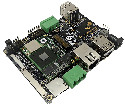
Arriving at the end of 2018, the HummingBoard CBi (CAN bus interface) is an even more industrial variant of the HummingBoard Edge (see below) that swaps the HDMI port and GPIO for CAN and RS485 ports. It also comes standard with Edge options including an enclosure, heatsink, WiFi/BT, and -40 to 85°C support. It has the same footprint as the Edge and similarly runs Linux on a choice of dual- or quad-core i.MX6 based MicroSOM modules. Debian, Yocto, Buildroot, and OpenWrt stacks are available with Linux 4.4x. Except for an extra user button and LEDs, the board is identical to the Edge. The 2GB Dual version is described in the LG link above, and the 4GB Quad version may be found here.

- Industrial-minded, sandwich-style i.MX6 board with wide-range power and optional -40 to 85°C
- Company/project — SolidRun
- LinuxGizmos report
- Product page
- Processor — NXP i.MX6 Solo, Dual, or Quad (1x, 2x, 2x, or 4x Cortex-A9 @ up to 1.2GHz); Vivante 2D/3D GPU
- Memory — Solo (512MB), Dual or Dual-lite (1GB), and Quad (2GB) DDR3 RAM; 8GB eMMC
- Price — $132 (Solo); $136 (DualLite); $197 (Quad) for basic configs
Like all the HummingBoards except for the sandwich-style, but i.MX8M based, HummingBoard Pulse, the HummingBoard Edge incorporates i.MX6 based MicroSOM modules. In Oct. 2016, SolidRun revised the HummingBoard MicroSOM COMs, which can also be bought separately. More recently, all the Edge SKUs have begun shipping with 8GB eMMC, up from the 4GB that some models were limited to. The 102 x 69mm HummingBoard Edge duplicates all the features of the smaller HummingBoard Pro and doubles the USB 2.0 count to four. It also adds M.2, SIM, and MIPI-DSI connections, provides a larger 36-pin GPIO connector, and boosts the power supply to a wide-range 7-36V. As with the Pro, there are numerous options including wireless modules. Extended and industrial temp versions are also available. See above for the Edge-like HummingBoard CBi, which adds CAN and serial ports.
- Stripped down version of HummingBoard Edge that adds MikroBus socket for Click modules
- Company/project — SolidRun
- LinuxGizmos report
- Product page
- Processor — NXP i.MX6 Solo, Dual, or Quad (1x, 2x, or 4x Cortex-A9 @ up to 1.2GHz); Vivante 2D/3D GPU
- Memory — Solo (512MB), DualLite and Dual (1GB), and Quad (2GB or 4GB) DDR3 RAM; 8GB eMMC
- Price — $97 to $197
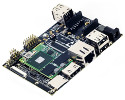
As the name suggests, the HummingBoard Gate is designed primarily for IoT gateway duty. The SBC is almost identical to the HummingBoard Edge, with the same 102 x 69mm footprint, 7-36V power supply, mini-PCIe slot, and optional wireless modules and metal enclosure. However, it lacks Edge features like LVDS, analog audio, or eMMC and M.2 storage. It also adds a MikroBus socket that accepts MikroElektronika’s 200-plus Click add-on I/O and sensor modules. Multiple temperature ranges are available, and like the Edge models, they all ship standard with 8GB eMMC.

- Updated version of flagship HummingBoard with mini-PCIe and mSATA
- Company/project — SolidRun
- LinuxGizmos report
- Product page
- Processor — NXP i.MX6 Solo, DualLite, Dual, or Quad (1x, 2x, 2x, or 4x Cortex-A9 @ up to 1.2GHz); Vivante 2D/3D GPU
- Memory — Solo (512MB), DualLite and Dual (1GB), and Quad (2GB) DDR3 RAM; 8GB eMMC
- Price — $97 to $177
The HummingBoard Pro is an updated version of the HummingBoard Base, which is now available only by special order. The Pro is identical to the Base except that it adds mini-PCIe, mSATA, LVDS, analog audio, RTC, and IR. It also offers two more internal USB headers. Options on both models include microSD slots, a wireless module, a power adapter, and a custom enclosure. Like the other HummingBoards, it now ships standard with 8GB eMMC.

- Powerful i.MX8M (and soon, i.MX8M Mini) board with mini-PCIe, M.2, HDMI 2.0, and dual GbE ports
- Company/project — SolidRun
- LinuxGizmos report
- Product page
- Processor — NXP i.MX8M Dual or Quad (2x or 4x Cortex-A53 @ 1.3GHz to 1.5GHz); Cortex-M4 MCU; Vivante GC7000 Lite GPU; i.MX8M Mini support coming soon
- Memory — 1GB LPDDR4-3200 (Dual); 3GB or 4GB (Quad); 8GB eMMC
- Price — $182 to $276
The Pulse advances to NXP’s 64-bit i.MX8M SoC via i.MX8 SOM modules available in Dual or Quad versions. Only the lowest $182 configuration with an i.MX8M Dual, no wireless, and commercial temp support falls under our $200 limit. The HummingBoard Pulse is a bit larger than the first-gen HummingBoards at 102 x 69mm, and it replaces the GPIO in favor of single mini-PCIe, M.2, and SIM slots. Like the HummingBoard Gate, it provides a Mikrobus connector for adding Click modules. The Pulse is notable for its dual GbE ports, and offers 2x USB 3.0, USB Type-C, and HDMI 2.0 ports. You also get an RTC, IR receiver, 7-36V input, a heatsink, and an optional metal enclosure. Note that you will soon be able to buy the Pulse with a new i.MX 8M Mini module that offers an i.MX8M Mini instead of the i.MX8M. The module adds a Gyrfalcon neural accelerator.

- The Edge and Edge-V offer RK3399 in MXM-enabled and Vim-style formats, respectively.
- Company/project — Shenzhen Wesion; Khadas project
- LinuxGizmos report
- Product page
- Processor — Rockchip RK3399 (2x Cortex-A72 at up to 2.0GHz, 4x Cortex-A53); Mali-T860 GPU; STM8S003 MCU
- Memory — 2GB (Basic) or 4GB (Pro/Max) LPDDR4 RAM; 16GB (Basic), 32GB (Pro), or 128GB (Max) eMMC
- Price — Edge: $99.90 (Basic), $149.90 (Pro), $219.90 (Max); Edge-V: $109.90 (Basic), $159.90 (Pro), $229.90 (Max)
The Khadas Edge was announced in July 2018 and launched on Indiegogo in November along with a similar Edge-V model and an RK3399Pro based Edge-1S. The Edge and Edge-V were promised for January shipment, but have been delayed. A May 14 update says the PCBs have arrived at the factory, and the Khadas shopping page has pre-order pages for the Edge and Edge-V and an order page for the optional, $45 Captain Carrier. The Edge has an MXM3 connector for deploying it like a compute module onto a cluster or carrier board such as the gaming-oriented Captain Carrier. It also offers FPC connectors for hooking up options like the Edge IO serial debug and GPIO board. The Edge-V replaces the MXM3 and FPC links with a Khadas Vim-like 40-pin RPi connector and adds a GbE port, microSD slot, and M.2 2280 socket with NVMe support. The Edge-V also adds MIPI-CSI and -DSI, eDP 1.3, touch support, RTC, IR, gesture sensor module, and 6-axis IMU. The still unavailable Edge-1S is identical to the Edge, but adds a GbE port and advances to Rockchip’s RK3399Pro with a 3-TOPS NPU. Features found on all three RPi-sized Edge models include single USB 3.0 and 2.0 ports and 4K-ready DP and HDMI 2.0a, with the DisplayPort available via one of the two USB Type-C ports. Basic models (2GB/16GB) offer dual-band WiFi-ac and BT 4.1 while the Pro and Max boost the Bluetooth to 5.0 and add RSDB WiFi. There’s a wide-range DC input and support for “Android N, P, Ubuntu Mate.”

- 64-bit Amlogic based board focuses on video
- Company/project — Shenzhen Wesion; Khadas project
- LinuxGizmos report
- Product page
- Processor — Amlogic S905X (4x Cortex-A53 @ up to 2GHz); Mali-450 MP2 GPU
- Memory — 2GB DDR3 RAM; 8GB (Basic) or 16GB eMMC (Pro)
- Price — $54.90 (Basic) or $69.90 (Pro)
The original Khadas Vim board was followed by a Vim2 model, which will soon take back seat to an upcoming Vim3. The 82 x 58mm Vim1 uses an Amlogic S905X, a lower-cost upgrade to the quad-core, -A53 Amlogic S905 found on the Odroid-C2. OS support includes Android 6.0 with Kodi-17, as well as Ubuntu 16.04, Buildroot, and 7.0 versions of the Kodi-oriented OpenELEC/LibreELEC. The Vim1 offers 802.11ac WiFi, Bluetooth 4.2, Fast Ethernet, and 3x USB 2.0 host ports, one of which is a Type-C OTG with power support. Other features include HDMI 2.0a, IR, microSD, and 40-pin expansion. Shenzhen Wesion’s Khadas project also offers a $99.90 Khadas Tone Board audio add-on for the Vim boards.

- Advanced, octa-core version of Vim1 with GbE and Pogo Pad controllers
- Company/project — Shenzhen Wesion; Khadas project
- LinuxGizmos report
- Product page
- Processor — Amlogic S912 (8x Cortex-A53 @ up to 1.5GHz); Mali-T820 MP3 GPU
- Memory — 3GB DDR4 RAM; 32GB eMMC
- Price — $99.90
The Khadas Vim2 Pro and Max models with additional eMMC are not currently available, although a note suggests that the Max may be back. The Vim2 has the same 82 x 58mm footprint as the Vim1, but advances to an octa-core Amlogic S912 and Mali-T820 GPU. Software support is similar except that the Vim2 moves to Android 7.1. Like the original, the board is equipped with HDMI 2.0a with [email protected] decoding, 2x USB 2.0, a micro-USB OTG Type-C with 5V input, and a 40-pin expansion connector. The Vim2 advances to GbE with WoL and adds an FPC link and two Pogo Pad I/O connectors, one of which controls an STM8S003 MCU for a programmable EEPROM. Other features include microSD, RTC, IR, and an acrylic case. With the recent announcement of the Khadas Vim3, which features a faster Amlogic S922X with 4x -A73 and 2x -A53 cores, Khadas has reduced the price of the Khadas Vim2 to $99.90. Update: shortly after publication, CNXSoft reported that the Vim3 will go on sale June 24 for a very competitive $70 (2GB/16GB) or $90 (4GB/32GB), although prices will increase on July 22.

- Headless, sandwich-style OpenWrt-on-MIPS board features Wave 2 WiFi
- Company/project — 8devices
- LinuxGizmos report
- Product page
- Processor – Realtek RTL819FS (1x MIPS 24Kc @ 1GHz)
- Memory — 128MB RAM; 32MB flash; empty eMMC socket
- Price — $59
8devices, which is known for MIPS-based modules such as the Carambola, has released an open-spec Komikan DVK board that features a not-so-open Komikan compute module. The module runs OpenWrt on a MIPS-based Realtek RTL819FS SoC accompanied by a Realtek RTL8822BEH chipset with Wave 2 WiFi and BT 4.1. Wave 2 provides concurrent 2.4GHz/5GHz, MU-MIMO 802.11a/b/g/n/ac for up to 1.166Gbps throughput. Unlike most Wave 2 devices, the Komikan can operate without a heatsink with low 6W consumption. The Komikan DVK adds an eMMC socket, microSD slot, 10/100 and 10/100/1000Mbps ports, 2x USB 2.0 ports, and a USB Type-C for power and console duty. You also get antennas and a 20-pin GPIO.
| La Frite (Libre Computer Board AML-S805X-AC) |

- Smaller, less powerful spin of Le Potato has 40-pin GPIO
- Company/project — Libre Computer
- LinuxGizmos report
- Product page
- Processor — Amlogic S805X (4x Cortex-A53 @ 1.2GHz); Mali-450 GPU
- Memory — 512MB or 1GB DDR4 RAM
- Price — $25 (512MB) or $30 (1GB)
In October, Libre Computer launched its La Frite (AML-S805X-AC) on Kickstarter and hit several stretch goals. Shipments are way late and backers are upset that the latest update was back on Jan 4. Nevertheless, LoverPi has a pre-order page with prices at least twice as high as on KS. La Frite is a smaller, stripped-down version of Le Potato (AML-S905X-CC) and is billed as a replacement for the Raspberry Pi Model A+. Since it launched, an improved, $25 RPi 3 Model A+ arrived, which Libre Computer compares to La Frite in a December update post. La Frite has a lower-powered, 1.2GHz S805X compared to the 1.5GHz S905X model found on Le Potato. Coastline ports include a low-profile 10/100 Ethernet, an HD-ready HDMI, 2x USB 2.0, and a micro-USB OTG port with power input. There’s also an RPi-style 40-pin header, an IR receiver, and a boot button. The board supports mainline Linux with Ubuntu, Debian, LibreELEC, Lakka, RetroPie, Android Oreo, and more.

- The typical mid-range Arm hacker SBC…if this was 2016
- Company/project — LeMaker
- Product page
- Processor — Actions S500 (4x Cortex-A9 @ up to 1.6GHz); PowerVR SGX544 GPU
- Memory — 1GB or 2GB DDR3 RAM; 8GB eMMC
- Price — $69
LeMaker’s sandwich-style Guitar SBC integrates a COM with a quad-core Actions S500. Images are available for Android 5.0, Ubuntu Mate, Ubuntu Core, Lemuntu, Armbian, ArchLinux, and a LeMaker XBMC (Kodi) media playing variant called LeMedia. The 88 x 81mm baseboard offers WiFi, Bluetooth, Ethernet, HDMI, micro-USB 3.0, and dual USB host ports. There’s also a MIPI-CSI interface and an RPi-compatible 40-pin connector.
| Le Potato (Libre Computer Board AML-S905X-CC) |

- RPi 3 lookalike that adds HDMI 2.0 and optional eMMC
- Company/project — Libre Computer
- LinuxGizmos report
- Product page
- Processor — Amlogic S905X (4x Cortex-A53 @ up to 2GHz); Mali-450 MP2 GPU
- Memory — 1GB or 2GB DDR3 RAM; optional 8GB to 64GB eMMC
- Price — $35 (1GB) or $45 (2GB)
After supplying its Kickstarter backers with the Raspberry Pi-like Le Potato, Libre Computer is selling the SBC at LoverPi as the Libre Computer Board (AML-S905X-CC). It’s equipped with the same quad -A53 S905X SoC found on the original Khadas Vim, and has the same size, port layout, and basic feature set as the Raspberry Pi 3, including 4x USB host ports, Fast Ethernet, and 40-pin expansion. There’s no WiFi/BT, but you get optional eMMC, IR, and an ADC + I2S header. The HDMI port is upgraded to 2.0 with 4K. The board ships with schematics and source code for Linux 4.14 LTS, Buildroot with Linux 4.9, Armbian Debian and Ubuntu, LibreELEC 9, and Android builds up to 8.0 (Oreo). Libre also launched a La Frite board that’s like a stripped-down Le Potato and created an RPi-like Renegade SBC with a Rockchip RK3388 that is sold by Firefly as the Firefly-ROC-RK3328-CC (see above). In addition, the company has launched an RK3399 based Libre Computer Board ROC-RK3399-PC (Renegade Elite) and an Allwinner H2+/H3 based RPi clone called the Tritium (see below).

- Camera and AI oriented board showcases Allwinner V5 V100 SoC and its visual analytics accelerator
- Company/project — Lindenis Tech
- LinuxGizmos report
- Product page
- Processor — Allwinner V5 V100 (4x Cortex-A7 @ 1.5GHz); VPU, ISP, and AIE analytics acceleration engine
- Memory — 1GB DDR3 RAM; opt. 8GB eMMC
- Price — $87 to $204
Last August, a startup founded by former Allwinner employees launched an open-spec, 139 x 85mm SBC that debuts a 1.5GHz Allwinner camera SoC called the V5 V100. Instead of the usual Mali GPU, the SoC offers a custom VPU, a dual-core ISP, and an “AIE” acceleration engine for visual analytics. The Lindenis V5 runs Linux 4.4, as well as a homegrown Debian 9 stack called Linbian that supports the V5 V100 SoC and its AIE engine with OpenCV, Compute Library, Tensorflow, and GStreamer with hardware acceleration. Taobao has the lowest, $87 and up price and non-Chinese buyers can more easily purchase it for $95 at AliExpress. Features include GbE and 4K-ready HDMI ports, 4x USB 2.0, and a micro-USB port. You also get 2x MIPI-CSI2 interfaces with an optional camera module, plus MIPI-DSI, audio, mic, microSD, optional WiFi/Bluetooth, and an RPi 40-pin header.
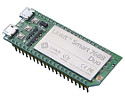
- Tiny, wireless-enabled. MIPS-based SBC with Grove add-on support
- Company/project — MediaTek Labs, SeeedStudio
- LinuxGizmos report
- Product page
- Processor — MediaTek MT7688AN (1x MIPS core @ 580MHz); Atmel ATmega32U4 MPU (Duo only)
- Memory — 128MB RAM; 32MB flash
- Price — $14.90 or $17.90 (Duo)
MediaTek Labs’ miniscule, Seeed-built LinkIt boards run OpenWrt on a 580MHz MIPS SoC, and target IoT endpoints and gateways. The $15 model measures 56 x 26mm, and offers WiFi, microSD, and dual micro-USB ports, while the $18, 61 x 26mm LinkIt Smart 7688 Duo adds an MPU for Arduino support. The boards provide GPIO, I2C, SPI, UART, PWM, and Fast Ethernet, plus I2S audio on the base model and ADC and SPI on the Duo. Seeed offers an optional breakout board for the standard LinkIt and provides three options for the Duo: breakouts for Arduino and Grove sensors and a more feature-rich Grove Starter Kit.

- i.MX6 SBC with dual SD slots, SATA, GbE, and an Arduino header
- Company/project — LinkSprite Technologies
- LinuxGizmos report
- Product page
- Processor — NXP i.MX6 Quad (4x Cortex-A9 @ up to 1.2GHz); Vivante GC355 GPU
- Memory — 1GB DRAM
- Price — $119
The LinkSprite Acadia runs Ubuntu 12.04 or Android 4.4 on an i.MX6 Quad. Compared to the V2 model covered in our original report linked to above, the V3 loses the onboard eMMC flash but furnishes both a microSD slot and dual SD slots. Other features include HDMI, LVDS, SATA, audio, and GbE, as well as three USB ports, dual cameras interfaces, and an Arduino-compatible header.

- 32-bit octa-core SBC imitates Cubieboard4
- Company/project — LinkSprite Technologies
- LinuxGizmos report
- Product page
- Processor — Allwinner A80 (4x Cortex-A15 @ up to 2GHz, 4x Cortex-A7 @ up to 1.3GHz); PowerVR G6230 GPU
- Memory — 2GB DRAM; 8GB flash
- Price — $95
The LinkSprite Arches was unveiled as the pcDuino8 in May 2014, and then arrived in beta form later in the year with its current name before going final in 2015. The Arches runs Linux or Android on an octa-core Allwinner A80 and is configured much like the A80-based Cubieboard4. The SBC is equipped with microSD, HDMI, GbE, and three USB ports (one of them 3.0 OTG), as well as WiFi, Bluetooth, and a CSI interface.
| MinnowBoard Turbot Dual-Core (MBT-2210) |

- Intel backed, dual-core Bay Trail Atom SBC
- Company/project — Silicom, MinnowBoard.org
- LinuxGizmos report
- Product page
- Processor — Intel Atom E3826 (2x Bay Trail @ 1.46GHz); Intel HD Graphics
- Memory — 2GB DDR3L RAM
- Price — $160
Built by Silicom (formerly ADI Engineering), with the support of the Intel-backed MinnowBoard.org community, the 3.9 x 2.9-inch MinnowBoard Turbot Dual (MBT-2210) replaced the CircuitCo-built MinnowBoard Max. There’s also a MinnowBoard Turbo Quad-core (see item below). This may be our last posting for the aging SBC, which is available for a low of $160 at Mouser. The short-lived Dual-Ethernet (Dual-E) model is no longer available. The Dual board includes a low-speed expansion header that provides Arduino-like prototyping I/O, as well as a 60-pin high speed connector for add-on boards called Lures. Other I/O includes dual USB ports plus GbE, micro-HDMI, and SATA. Firmware support includes Debian, Ubuntu, Yocto Project, Android 4.4, and Windows 10.
| MinnowBoard Turbot Quad-Core (MBT-4210) |

- Quad-core Atom version of MinnowBoard Turbot
- Company/project — Silicom, MinnowBoard.org
- LinuxGizmos report
- Product page
- Processor — Intel Atom E3845 (4x Bay Trail @ 1.91GHz); Intel HD Graphics
- Memory — 2GB DDR3L RAM
- Price — $190
The MinnowBoard Turbo Quad-core, which began shipping in 2017, has the same 99 x 74mm footprint as the dual-core Turbot Dual, and much the same layout and feature set. The Quad advances to the quad-core, 1.91GHz Atom E3845 from the same 22nm Bay Trail generation, and adds a heatsink, a fan, and a faster GbE controller. As with the Turbo Dual, ADI (now called Silicom) launched a Dual-Ethernet model that is now defunct. A previously teased, Apollo Lake MinnowBoard 3 is over two years late. The Minnowboard project appears to be heading for the exits.

- Compact, low-power i.MX6 UL boards with optional -40 to 85°C support
- Company/project — MYIR
- LinuxGizmos report
- Product page
- Processor — NXP i.MX6 ULL or i.MX6 UL (1x Cortex-A7 @ 528MHz or 696MHz, respectively); 2D PXP GPU
- Memory — 256MB DDR3 RAM; 256MB NAND
- Price — $28.80 (i.MX6 ULL) or $29.80 (UL)
MYIR is primarily a commercial board vendor, but it has spun several open-spec hacker boards like the MYS-6ULX SBC that have crossover appeal to makers. Others include the Sitara-based Rico Board and Zynq-based Z-turn boards (see farther below). The MYS-6ULX offers a choice of i.MX6 UL (UltraLite) or its very similar sibling, the i.MX6 ULL. Each SBC model has its own unique super-power: The i.MX6 UL version offers -40 to 85°C support instead of 0 to 70°C, and the i.MX6 ULL model features a USB-powered WiFi radio. Otherwise, the 70 x 55mm boards are identical. You get a microSD slot, Fast Ethernet, USB host, and micro-USB 2.0 OTG ports, as well as a debug connector and an LCD interface for optional touchscreens. The dual 20-pin expansion connectors can be used to attach an optional baseboard. The MYS-6ULX comes with a Linux BSP with a 4.1.15 kernel and either Debian or Yocto Project with Qt. There’s no forum or dedicated community site, but you get full schematics, support, and extensive documentation.

- Upgrade to NanoPC-T3 doubles the memory and adds -40 to 80°C support
- Company/project — FriendlyElec
- LinuxGizmos report
- Product page
- Processor — Samsung S5P6818 (8x Cortex-A53 @ 400MHz to 1.4GHz); Mali-400 MP GPU
- Memory — 2GB DDR3 RAM; 16GB eMMC
- Price — $75
FriendlyElec (AKA FriendlyARM) is known for its many NanoPi SBCs, but it also offers some more feature-rich NanoPC models. The NanoPC-T3 Plus replaced the NanoPC-T3, and is similarly equipped with an octa-core S5P6818. The earlier, almost identical NanoPC-T2 with a quad-core S5P4418 is still available for $49). The T3 Plus doubles the RAM and flash of the T3 and adds -40 to 80°C support. It’s slightly larger at 100 x 64mm, and switches one of the USB headers to a Type-A port so there are 3x coastline USB 2.0 host ports instead of two. Like the T3, the T3 Plus supplies WiFi, BT 4.0, and a GbE port, as well as microSD and micro-USB client connections. Media ports include HDMI, LVDS, LCD, MIPI-DSI, MIPI-CSI, and audio. In place of the 40-pin RPi connector found on NanoPi boards, the NanoPC-T3 Plus provides a 30-pin GPIO header. OS support includes Android, Debian, and the Ubuntu Core 16.04 based FriendlyCore. Available images for each of FriendlyElec’s boards may be found here.

- Compact RK3399 hacker board with 40-pin GPIO
- Company/project — FriendlyElec
- LinuxGizmos report
- Product page
- Processor — Rockchip RK3399 (2x Cortex-A72 @ up to 2.0GHz, 4x Cortex-A53 at up to 1.5GHz); Mali-T860 GPU
- Memory — 4GB DDR4 RAM; 16GB eMMC
- Price — $110
When it debuted in early 2018, the 100 x 64mm NanoPC-T4 was the smallest RK3399 SBC around, an honor that in the summer fell briefly to FriendlyElec’s Raspberry Pi like NanoPi M4 and in the fall to the smaller, 1GB RAM only NanoPi Neo4 (see below). The relatively high price is due to a standard allotment of 4GB of RAM. FriendlyElec’s first Rockchip-based SBC is also its most powerful, combining the hexa-core RK3399 with advanced features like M.2 and native SATA. Display interfaces include HDMI 2.0, DP, eDP, and MIPI-DSI. You also get MIPI-CSI with dual-camera support, an RPi-compatible 40-pin interface, and a 0 to 80°C operating range. OS support includes Android 8, Lubuntu Xenial, and the similarly Ubuntu based FriendlyCore and FriendlyDesktop Bionic.

- Compact Allwinner A64 SBC is one of the cheapest 64-bit boards around
- Company/project — FriendlyElec (FriendlyARM)
- LinuxGizmos report
- Product page
- Processor — Allwinner A64 (4x Cortex-A53 @ 1.2GHz); Mali-400 MP2 GPU
- Memory — 1GB DDR3 RAM
- Price — $20
FriendlyElec’s NanoPi A64 has a 64 x 60mm footprint that matches the NanoPi M3. The A64 provides two USB host ports, a power-only micro-USB, and HDMI, MIPI-DSI, microSD, audio, and DVP camera connections. The 5V SBC offers GbE and WiFi, but no Bluetooth, and you get the NanoPi-typical 40-pin RPi header. Images are available for FriendlyCore Xenial and Ubuntu Mate. Like most of the NanoPi and NanoPC SBCs boards, the NanoPi A64 is available with a growing list of options ranging from cases to heat sinks to camera modules. Also like its siblings, the price is insanely cheap, but shipping to the U.S. is fairly expensive — single-unit prices range from $16 to $20, compared to under $4 for Orange Pi boards.

- Tiny, affordable, quad -A7 SBC can be plugged into an optional 2G carrier
- Company/project — FriendlyElec (FriendlyARM)
- LinuxGizmos report
- Product page
- Processor — Allwinner H2+ (Duo) or H3 (Duo2) with 4x Cortex-A7 @ 1.2GHz, Mali-400 MP2 GPU
- Memory — 512MB RAM
- Price — $19.50; $10 for IoT-2G carrier
The tiny (50 x 25.4mm) NanoPi Duo was launched in Aug. 2017 as the first of several headless, COM-like NanoPi boards, including the more recent, 40 x 40mm NanoPi Neo Core and Core2 spins of the Neo and Neo2. The $13 to $15 Duo is now out of stock, apparently replaced by last year’s new NanoPi Duo2, which switches the HD-ready Allwinner H2+ to the similar, but 4K ready, H3 model. The NanoPi Duo2 also provides an optional new IoT-2G Application Carrier Board that replaces the Duo’s optional Mini Shield carrier. The only other differences include the addition of Bluetooth and a narrower -20 to 70°C range. The Duo2 has 32x I/O pins via a dual-in-line interface designed to plug into the IoT-2G carrier or a 2.55mm pitch breadboard. Unlike the Core boards, the Duo2 supplies WiFi, a microSD slot, and a micro-USB port, qualifying them as standalone SBCs. The SBCs supply headers for 10/100 Ethernet, 2x USB host, audio, CVBS, and serial debug. The 85 x 56mm IoT-2G carrier is sized like a Raspberry Pi but is limited to dual USB 2.0 host ports. The board has quad-band, 2G GSM/GPRS module and microSIM slot, as well as a 2G antenna. The NanoPi Duo2 is available with FriendlyCore 16.04 Xenial and OpenWrt.

- RPi-like board is like a stripped down NanoPi K2, but with new camera and audio features
- Company/project — FriendlyElec (FriendlyARM)
- LinuxGizmos report
- Product page
- Processor – Allwinner H5 (4x Cortex-A53 @ up to 1.4GHz); Mali-450 GPU
- Memory — 2GB DDR3 RAM
- Price — $35
In April 2018, FriendlyElec engineered a spinoff of the $39, but now out of stock NanoPi K2. The new NanoPi K1 Plus switches from the K2’s Amlogic S905 to a similarly quad -A53 Allwinner H5 SoC and swaps out the WiFi/Bluetooth for a 2.4GHz WiFi-only module. It also demotes the HDMI 2.0 port to an HDMI 1.4 port with 4K video throttled back to 30fps. The K1 Plus subtracts one of the USB 2.0 host ports, leaving 3x USB 2.0 ports total along with a micro-USB OTG port with power input that fills in for the removed DC-in jack. It also adds a DVP camera interface, a mic, and a 3.5mm audio jack that outputs CVBS signals. Other features are the same, including the 2GB RAM, microSD slot, eMMC socket, and GbE port. You also get an IR receiver, a heatsink, a debug header, and a 40-pin connector.

- Upgrade to NanoPi M1 adds wireless and GbE
- Company/project — FriendlyElec (FriendlyARM)
- LinuxGizmos report
- Product page
- Processor — Allwinner H3 (4x Cortex-A7 @ 1.2GHz); ARM Mali-400 MP2 GPU
- Memory — 1GB DDR3 RAM; 8GB eMMC
- Price — $38
This more feature-rich update of the discontinued NanoPi M1 retains the Allwinner H3 but is slightly smaller at 64 x 60mm. The higher price of the NanoPi M1 Plus reflects the standard 1GB RAM and 8GB eMMC, as well as new features like WiFi, Bluetooth, a mic, and Gigabit Ethernet. One of the three USB 2.0 host ports, however, has moved to an onboard header. Other features include HDMI, DVP camera, CVBS A/V, IR, and a microSD slot, plus a 40-pin RPi header. OS options include FriendlyCore Xenial, OpenWrt, and Debian.

- Affordable RK3399 based Raspberry Pi pseudo-clone
- Company/project — FriendlyElec
- LinuxGizmos report
- Product page
- Processor — Rockchip RK3399 (2x Cortex-A72 @ up to 2.0GHz, 4x Cortex-A53 at up to 1.5GHz); Mali-T864 GPU
- Memory – 2GB or 4GB DDR4 RAM; eMMC socket
- Price — $65 (2GB) or $95 (4GB)
Of the three RK3399 based SBCs released by FriendlyElec in 2018, the NanoPi-M4 may be the “just right” tradeoff. You get a choice of 2GB or 4GB RAM instead of being limited to 1GB with the smaller, $45 NanoPi Neo4 or 4GB with the larger, $110 NanoPC-T4. Unlike the NanoPC-T4, the NanoPC-M4 has a Raspberry Pi form factor, layout and 40-pin header. It also has a 24-pin header with 2x PCIe lanes. Other features include native GbE, 802.11ac, Bluetooth, HDMI 2.0a, USB Type-C, and 4x USB 3.0 ports. You also get audio I/O, an RTC, -20 to 70°C support, and two configurable MIPI-DSI/CSI interfaces. OS support includes Android 7.1.2 Lubuntu 16.04, FriendlyCore 18.04, and FriendlyDesktop 18.04.

- Super-affordable octa-core -A53 board features RTC and advanced power management
- Company/project — FriendlyElec (FriendlyARM)
- LinuxGizmos report
- Product page
- Processor — Samsung S5P6818 (8x Cortex-A53 @ 400MHz to 1.4GHz); “3D” GPU
- Memory — 1GB DDR3 RAM
- Price — $35
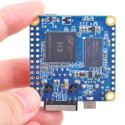
In Nov. 2017, FriendlyElec replaced its NanoPi 2 Fire with two fiery new models: a $35 NanoPi Fire3 with an octa-core S5P6818 and 1GB RAM and a $28 NanoPi Fire2A with the same quad -A9 S5P4418 found on the defunct NanoPi 2 Fire. The two boards are otherwise identical, but unless you’re buying in volume, the only reason we can see to choose the slower NanoPi Fire2A is to save on power. FriendlyElec has now added “LTS” to the name of the Fire3 to indicate it is a long-term support model. The chief differences between the new Fire3 and earlier 2 Fire include a realignment of the USB 2.0 port into a vertical position, and the replacement of the HDMI port with a micro-HDMI, enabling it to sit side-by-side with the GbE and USB ports. You also get a microSD slot plus RGB LCD, DVP camera, serial debug, and a RPi 40-pin interface. The 5V board is powered by a micro-USB OTG, and there’s an RTC with battery and PMIC. The 75 x 40mm Fire3 runs Android 5.0 and Linux distros including FriendlyCore. With the discontinuation of the NanoPi M2A, this is the only Samsung-driven NanoPi around. The Fire3 is also part of a 12-board, 96-core compute cluster.
- Company/project — FriendlyElec (FriendlyARM)
- Headless, IoT-focused quad -A7 boardlet is smaller than an RPi Zero
- LinuxGizmos report
- Product page
- Processor — Allwinner H3 (4x Cortex-A7 @ 1.2GHz); Mali-400 MP2 GPU
- Memory — 256MB or 512MB DDR3 RAM (Neo)
- Price — $13 or $15 (512MB)
The Neo was the first of a sub-series of tiny NanoPi boards such as the wireless enabled Neo Air, quad -A53 Neo2-LTS, and the Neo Plus2 (see below). The Neo boards are among the world’s smallest and most affordable quad-core ARM SBCs. At 40 x 40mm, they occupy only 1,600 square millimeters, compared to 1,950 sq. mm for the 65 x 30mm Raspberry Pi Zero. The NanoPi Neo, which has now been given LTS status, is equipped with microSD, USB 2.0 host, and micro-USB OTG ports, but like the other Neo variants, it lacks a display interface. You get 36 GPIO pins instead of the usual RPi connector. The board runs Ubuntu Core or Mate on the Allwinner H3.

- Quad -A53 version of Neo offers long-term support
- Company/project — FriendlyElec (FriendlyARM)
- LinuxGizmos report
- Product page
- Processor — Allwinner H5 (4x Cortex-A53 @ 1.2GHz); Mali-450 GPU)
- Memory — 512MB or 1GB DDR3
- Price — $20 or $30 (1GB)
In early 2017, the quad -A7, 40 x 40mm NanoPi Neo was joined by a 64-bit quad -A53 near twin called the NanoPi Neo2. The Neo2 was updated with a v1.1 model that added a 1GB RAM option, and it’s now referred to as the Neo2-LTS (for long-term support). The Neo2 is the same as the Neo except for the faster H5 SoC, a switch to GbE from 10/100 Ethernet, two more USB headers, and the lack of a 256MB RAM option. In Dec. 2017, FriendlyElec launched COM versions of the Neo and Neo2 called the NanoPi Neo Core ($8) and NanoPi Neo Core2 ($25), which are designed to work with an optional, $11, RPi-like Mini Shield carrier board. The sandwich-style design is much like the NanoPi Duo and its own Mini Shield variant except that the Core boards are true COMs rather than SBCs.

- The smallest RK3399 SBC around is super affordable, but limited to 1GB of RAM.
- Company/project — FriendlyElec (FriendlyARM)
- LinuxGizmos report
- Product page
- Processor — Rockchip RK3399 (2x Cortex-A72 @ up to 2.0GHz, 4x Cortex-A53 at up to 1.42GHz); Mali-T860 GPU
- Memory — 1GB DDR3 RAM; eMMC socket
- Price — $50
When it launched in Oct. 2018, the $50 Neo4 was the world’s smallest, cheapest RK3399 based SBC, and although the Rock Pi 4 has since edge it out on price, it’s still the puniest. Although rich with features, it offers only 1GB of RAM, which is likely insufficient for the high-powered RK3399 SoC. At 60 x 45mm, the SBC is larger than other Neo boards, which lack its HDMI 2.0a port with [email protected] support and 4-lane MIPI-CSI. Other features include GbE, USB 3.0, and USB 2.0 ports, a USB Type-C power and OTG port, and a USB 2.0 header. You also get WiFi/BT, a 40-pin header, and -20 to 70°C support. From the microSD slot or eMMC socket (add $12 for 16GB), you can boot Linux 4.4 LTS, Lubuntu 16.04, FriendlyCore 18.04, FriendlyDesktop 18.04, Armbian, and Android 7.1.2 or 8.1. FriendlyElec also offers sells two other RK3399 SBCs: the high-end, SATA-ready NanoPC T4 and the mid-range, RPi style NanoPi M4.

- Wireless version of Neo adds eMMC and a camera connector, but loses the LAN and USB ports
- Company/project — FriendlyElec (FriendlyARM)
- LinuxGizmos report
- Product page
- Processor — Allwinner H3 (4x Cortex-A7 @ 1.2GHz); ARM Mali-400 MP2 GPU
- Memory — 512MB DDR3 RAM; 8GB or 32GB eMMC
- Price — $28 (8GB) or $39 (32GB)
The NanoPi Neo Air-LTS is a wireless variant of the NanoPi Neo. This headless IoT board has the same 40 x 40mm footprint, and similarly runs Ubuntu Core and Mate on an Allwinner H3. The Neo Air comes standard with 512MB of RAM, and adds WiFi, Bluetooth 4.0, and a DVP camera connector. You also get 8GB to 32GB eMMC. The Air sacrifices the Neo’s Ethernet port and the sole USB host port, however, leaving you only a micro-USB OTG for power and data. You can derive more USB ports or a power connection via the split bank of 36 GPIO pins. The board was recently designated as LTS (long-term support).

- As if a Neo Air mated with a Neo2, but then expanded
- Company/project — FriendlyElec (FriendlyARM)
- LinuxGizmos report
- Product page
- Processor — Allwinner H5 (4x Cortex-A53 @ 1.5GHz); ARM Mali-450 MP2 GPU
- Memory – 512MB or 1GB DDR3 RAM; 8GB eMMC
- Price — $32 (512MB) or $42 (1GB)
The NanoPi Neo Plus2 SBC combines the WiFi, Bluetooth 4.0, and 8GB eMMC of the Neo Air with the quad -A53 Allwinner H5 of the Neo2. It also boosts RAM to 1GB, although there’s a new 512MB option as well. It’s not a Neo drop-in replacement, however, as the dimensions have grown to 52 x 40mm. Like the other Neo boards, the SBC offers a bootable microSD slot, GbE port, dual USB 2.0 ports, and a micro-USB for 5V power. As before, you get serial debug and audio interfaces, as well as two banks of expansion connectors: a high-speed 12-pin interface and a 24-pin low-speed connector. A $7, I2C-driven NanoHAT OLED display add-on with 128 x 64-pixel resolution ships with an open source driver and NanoHAT Motor Python Library. The add-on can be stacked on any of the Neo boards, with the combo housed in an optional aluminum casing.

- Tiny IoT gateway SBC has Gigabit and Fast Ethernet ports plus WiFi/BT and 3x USB ports
- Company/project — FriendlyElec (FriendlyARM)
- LinuxGizmos report
- Product page
- Processor — Allwinner H3 (4x Cortex-A7 @ 1.2GHz); ARM Mali-400 MP2 GPU
- Memory — 512MB or 1GB DDR3 RAM; 8GB eMMC (only on 1GB RAM SKU)
- Price — $29 (512MB) or $39 (1GB/8GB)
The R1 is yet another Allwinner H3 based NanoPi, but this time with a twist: a pair of Ethernet ports (GbE and Fast) and an 802.11n/Bluetooth 4.0 module for gateway networking duty. The tiny (60 x 55.5mm), headless SBC runs FriendlyCore with Linux-4.14-LTS or OpenWrt on the quad -A7 SoC. Other R1 features include dual USB 2.0 host ports, micro-USB power port, -20 to 70°C support, an RTC, and a standard metal case with external antenna. It’s most closely comparable with the slightly smaller, H2+ based Banana Pi BPI-W2 with dual 10/100Mbps ports.

- First i.MX8M Mini-based hacker board has a PCIe slot and optional PoE
- Company/project — Boundary Devices
- LinuxGizmos report
- Product page
- Processor — NXP i.MX8M Mini Quad (4x Cortex-A53 @ 1.5GHz to 2.0GHz); Cortex-M4F @ 400MHz; GCNanoUltra for 3D, GC320 for 2D GPUs
- Memory — 2GB or 4GB LPDDR4 RAM; 8GB to 128GB eMMC
- Price — $135; $155 with WiFi/BT; $155 with dev kit but no WiFi/BT; $175 with dev kit and WiFi/BT (all packages 2GB/8GB)
The Nitrogen8M_Mini features NXP’s new i.MX8M Mini SoC, which is faster than an i.MX8M, but is limited to HD video. The 114.3 x 88.9mm board offers a choice of pre-certified WiFi-ac/BT with or without a dev kit, which includes a 5V power supply, an 8GB microSD card with Linux, a battery, and a serial console cable. The standard SKU includes a GbE port with optional PoE. USB ports are limited to single USB 2.0 and micro-USB OTG ports, but you get MIPI-DSI and -CSI, with the latter available with an optional 5MP camera. The SBC offers dual audio jacks, a PCIe slot, an RTC, a PMIC, and a choice of 0 to 70°C or -40 to 85°C operation. OS support starts with Linux kernel 4.9x and includes Yocto, Ubuntu 18.04, Debian Stretch 9.5, Android 8.1. Boundary Devices also sells a more expensive, sandwich-style offering based on its Nitrogen8M_Mini SOM, but it starts at $299. Also note that CompuLab is pairing a Mini-based UCM-iMX8M-Mini module with an open-spec carrier, but the combo costs $236 in single units.

- The smallest of the Amlogic-based Odroid-C boards targets IoT
- Company/project — Hardkernel, Odroid project
- LinuxGizmos report
- Product page
- Processor — Amlogic S805 (4x Cortex-A5 @ 1.5GHz); Mali-450 GPU
- Memory — 1GB DDR3 RAM; optional eMMC 4.5
- Price — $29.80 (with $1.80 Connector Pack)
Aimed at IoT and robotics, the Odroid-C0 is a smaller (65 x 56mm), somewhat stripped-down version of the Odroid-C1+ (see below). It has the same quad-core, Cortex-A5 Amlogic SoC and offers the same Ubuntu and Android 4.4 support with GCC 4.9.2 Linux toolchain. Coastline ports are limited to a single HDMI, but an optional Connector Pack lets you solder on real-world connections for unpopulated interfaces. These include dual USB host, serial console, IR, I2S, and an RPi-like 40-pin interface. A battery connector with charging circuit supports an optional 3.7V Li-Po. Internet connectivity requires an optional WiFi dongle.

- A Raspberry Pi lookalike with optional eMMC and full-size HDMI
- Company/project — Hardkernel, Odroid project
- LinuxGizmos report
- Product page
- Processor — Amlogic S805 (4x Cortex-A5 @ 1.5GHz); Mali-450 GPU
- Memory — 1GB DDR3 RAM; optional 8GB eMMC
- Price — $35
The Odroid-C1+ upgraded the earlier Odroid-C1 with features like a full-size HDMI port, a standard heatsink, and I2S audio and micro-USB-OTG links. The C1+ has a price, footprint, and feature set that is almost identical to the original, 32-bit Raspberry Pi 2, but has a faster processor, and supports Android 4.4 in addition to Ubuntu 14.04. The C1+ is further equipped with a microSD slot and optional eMMC, as well as GbE, serial console, ADC, and a Pi-compatible 40-pin connector.
- RPi 3 pseudo clone with 2GB RAM and up to 64GB (but no built-in WiFi)
- Company/project — Hardkernel, Odroid project
- LinuxGizmos report
- Product page
- Processor — Amlogic S905 (4x Cortex-A53 @ up to 1.5GHz); Mali-450 MP2 GPU
- Memory — 2GB DDR3 RAM; optional 8GB eMMC
- Price — $46
The Odroid-C2 came in seventh and eighth place in our last two SBC reader surveys. It has the same 85 x 56mm size and layout as the Odroid-C1+ and Raspberry Pi 3, but advances to a quad -A53 Amlogic S905 SoC. It’s faster than the RPi 3 or 3+, but there’s no WiFi or Bluetooth, and the price is higher. The C2 doubles the RAM of the C1+ to 2GB and offers a choice of optional storage between up to 64GB of eMMC or an 8GB or 16GB SD 3.01 compatible UHS-1 microSD card. The SBC can output 4K @ 60Hz video, and has almost everything the C1+ has, including GbE and HDMI ports, four USB host ports, and a 40-pin RPi connector. Images are available for Android 5.1 or Ubuntu 16.04, based on a Linux 3.14 LTS kernel.

- First Intel Gemini Lake hacker SBC may be fastest hacker board around.
- Company/project — Hardkernel, Odroid project
- LinuxGizmos report
- Product page
- Processor — Intel Celeron J4105 — 4x Gemini Lake cores @ 2.3GHz; 10W TDP; Intel UHD Graphics 600
- Memory — 0GB to 32GB DDR4 RAM; eMMC socket
- Price — $160 with minimum 4GB RAM and 8GB eMMC ($110 without memories)
The world’s first Intel Gemini Lake hacker board — and likely the fastest board in our roundup — touched down last November after an October announcement. The Odroid-H2, which sells without RAM or eMMC for $111 or with a minimal 4GB/8GB for $160, offers maximum memory support of 32GB RAM and 128GB eMMC. Sadly, it’s been out of stock the last few months due to production delays from Intel. In February, Hardkernel suggested production should resume this summer, so we’ll give it the benefit of the doubt here. Hardkernel’s first x86 based Odroid runs Ubuntu 18.10 on a 2.3GHz Celeron J4105 from Intel’s Gemini Lake — the latest generation of its lower-power Atom SoC line. The 110 x 110mm SBC offers 2x SATA 3.0, 2x GbE, HDMI and DP, 4x USB (2x 3.0), and an M.2 slot for NVMe storage. Other features include a 14-20V DC input, RTC, and a heatsink that supports 70°C temperatures at full load.
- Debut platform for high-end Amlogic S922X offers 4x USB 3.0, GbE, HDMI 2.0, an audio DAC, and a 40-pin header.
- Company/project — Hardkernel, Odroid project
- LinuxGizmos report
- Product page
- Processor — Amlogic S922X (4x Cortex-A73 @ up to 1.8GHz; 2x -A53 @ up to 1.9GHz); Mali-G52 GPU
- Memory — 2GB or 4GB DDR4 RAM; empty eMMC socket
- Price — $63 (2GB) or $79 (4GB)
The Odroid-N2 is arguably the most significant SBC launch of early 2019. It replaces the RK3399-based Odroid-N1, which never came to market. The N2 features a faster new hexa-core Cortex-A73 and -A53 based Amlogic S922X with advanced Mali-G52 graphics for around the same price as the most competitive RK3399 boards. Available with 2GB or 4GB RAM, the 90 x 90 x 17mm SBC runs Android 9 Pie and Ubuntu 18.04 LTS with Linux 4.9.162 LTS. The board has a GbE port and optional USB WiFi adapter that fits into one of the 4x USB 3.0 host ports. You also get micro-USB OTG, composite A/V, and an HDMI 2.0 port with [email protected] with HDR, CEC, and EDID support. There’s also an RPi-like 40-pin header and a 7.5-20V DC input plus RTC, IR, console, and options including SPDIF and a cooling fan.

- Versatile octa-core SBC now available in heatsink “Q” model
- Company/project — Hardkernel, Odroid project
- LinuxGizmos report
- Product page
- Processor — Samsung Exynos5422 (4x Cortex-A15 @ 2.0GHz and 4x Cortex-A7 @ 1.4GHz); Mali-T628 MP6 GPU
- Memory — 2GB LPDDR3 RAM; opt. eMMC
- Price — $49
Despite its age, the Odroid-XU4 moved from fourth to third place in our last SBC reader survey. It uses the same octa-core Exynos5422 and Mali-T628 GPU as the earlier XU3, and provides a GbE port, audio-enabled HDMI, 2x USB 3.0, and a single USB 2.0. There’s now an Odroid-XU4Q model, which is identical, except that the fan is replaced with a heatsink. Both models are discounted to $49, down from the usual $59. The XU4 has a 12-pin GPIO header and 30-pin expansion connector. Options include USB-based SATA 3.0, an I/O board, and various wireless add-ons. The Odroid-XU4 ships with several versions of Android up to 7.1 Nougat, as well as Ubuntu 16.04, based on a Linux 4.14 LTS kernel. A lightweight version of the board powers a $49 Odroid-HC1 mini-PC. Up to four XU4 SBCs can be loaded onto a $220 Odroid-MC1 cluster computer. Hardkernel also offers a stackable, single-unit Odroid-MC1 Solo version for $48, and the XU4 powers the $54 Odroid-HC2 NAS platform.
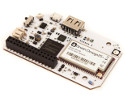
- First SBC form-factor Omega board runs OpenWrt on MIPS
- Company/project — Onion
- LinuxGizmos report
- Product page
- Processor — MediaTek MT7688AN (1x MIPS core @ 580MHz)
- Memory — 512MB RAM; 8GB flash
- Price — $49
Last December, Onion released an Omega2 Pro model that runs OpenWrt on the same MIPS-based, WiFi-equipped MediaTek MT7688AN SoC as its Omega2 compute module, but with real-world USB and micro-USB ports. The SBC has shipped and is still available for $49 on Crowd Supply. An $82 package adds Ethernet and OLED expansion modules via the new 30-pin expansion connector. A $169 package gives you all eight modules, including GPS, servo, relay, NFC/RFID, ADC, and prototyping options. Unlike the MT7688AN-equipped LinkIt board, there’s no Arduino companion chip. The 73 x 44mm SBC boosts boosts RAM to 512MB (128MB RAM with 384MB flash swap file) and flash to 8GB compared to the Omega2 module. The 2.4GHz WiFi radio comes with AP support and antenna. Onion recently launched a sandwich-style, $99 Omega2 LTE SBC expected to ship in August. It has the same processor as the Omega2 Pro but implemented on a removable Omega2S+ module with only 128MB RAM and 32MB flash. The board adds battery support and a Type-C port plus a Quectel EC25 chipset with Cat 4 LTE and GNSS.
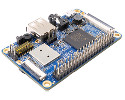
- $10 board with rarely seen Cortex-A5 SoC features 2G GSM/GPRS/EDGE
- Company/project — Shenzhen Xunlong
- LinuxGizmos report
- Product page
- Processor — RDA RDA8810PL (1x Cortex-A5); Vivante GC860 GPU
- Memory — 256MB LPDDR2 RAM; 500MB NAND
- Price — $9.90
Most of Shenzhen Xunlong’s Orange Pi boards have 40-pin Raspberry Pi compatible connectors and low prices that are matched with generous, under-$4 shipments to the U.S. Linux and Android OS images available on the Orange Pi site vary widely by board. The first Orange Pi on our list is somewhat atypical in that it offers an integrated 2G GSM/GPRS/EDGE baseband, 2G antenna, and SIM slot. Considering the decline of 2G services, the appeal may be limited. The 68 x 42mm Orange Pi 2G-IOT can withstand -10 to 65°C temperatures, and runs Android 6.1, Ubuntu Server, Debian, or Raspbian on a single-core, Cortex-A5 RDA RDA8810PL SoC (typically 1GHz). The 2G-IOT offers a WiFi/BT module, USB 2.0 host and micro-USB OTG ports, and LCD, MIPI-CSI, and audio links. There’s also an RPi-style 40-pin connector. The board has dropped to $9.90 at AliExpress.

- Allwinner H6 SoC enables HDMI 2.0, GbE, 4x USB 3.0, and mini-PCIe
- Company/project — Shenzhen Xunlong
- LinuxGizmos report
- Product page
- Processor — Allwinner H6 (4x Cortex-A53 @ 1.8GHz); ARM Mali-T720 MP2 GPU
- Memory — 1GB or 2GB LPDDR3 RAM; zero or 8GB eMMC
- Price — $29.90 (1GB); $34.90 (1GB/8GB); $39.90 (2GB/8GB)
The only new Orange Pi of early 2019 is one of the most hotly anticipated models in years. It taps the same Allwinner H6 SoC as the $20 Orange Pi One Plus and $25 Orange Pi Lite2, but adds a few more features, including a mini-PCIe expansion slot and 2GB RAM and 8GB eMMC options. The 90 × 64mm Orange Pi 3 is larger than the earlier H6-based Orange Pi models but is still limited to the same 26- rather than 40-pin GPIO header. Other features include microSD, GbE, 802.11ac, BT 5.0, HDMI 2.0a, audio AV, mic, IR, micro-USB 2.0, and micro-USB OTG. OS support includes Android 7.0, Ubuntu, Debian, and an experimental Linux 4.19 kernel available from Armbian.

- Android-powered 3G cellular board also offers WiFi, BT, GPS, and FM
- Company/project — Shenzhen Xunlong
- LinuxGizmos report
- Product page
- Processor — MediaTek MT6572 (2x Cortex-A7 @ 1.2GHz); Mali-400 MP1 GPU
- Memory — 256MB (A) or 512MB (B) DDR2 RAM; 512MB (A) or 4GB (B) eMMC
- Price — $19.90 (A) or $24.90 (B)
The Orange Pi 3G-IOT provides a middle-ground option between the Orange Pi 2G-IOT (above) and Orange Pi 4G-IOT (below). There are two SKUs: a 3G-IOT-A model with 256MB RAM and 512MB eMMC and a 512MB/4GB 3G-IOT-B model. Thanks to its budget smartphone oriented, dual -A7 MediaTek MT6572 SoC, there’s built-in support for 3G GSM, WiFi, BT, GPS, and FM. The 68 x 52mm board has little in common with the other IOT branded Oi rkrange Pi boards. The modest feature set includes an LCD interface, MIPI-CSI, audio jack and mic, and USB 2.0 host and micro-USB power ports. You also get a 40-pin expansion connector. An Ubuntu 16.04 image is now available in addition to Android 4.4.

- 4G LTE board runs Android 8.1 on a quad -A53 SoC
- Company/project — Shenzhen Xunlong
- LinuxGizmos report
- Product page
- Processor — MediaTek MT6737 (4x Cortex-A53); Mali-T720 MP1 GPU
- Memory — 1GB DDR3 RAM; 8GB eMMC
- Price — $45
Despite the similar names, the new Orange Pi 4G-IOT has little in common with the lower-end Orange Pi 2G-IOT and 3G-IOT SBCs except for its integrated cellular modem, which in this case is 4G LTE. There’s no Ethernet port, but you also get WiFi, BT, FM, and GPS. The 4G-IOT is typical of many Orange Pi boards in that it has a Raspberry Pi footprint (85 x 55mm) and 40-pin header. An HDMI port is available along with LCD, camera, and audio connectors. Other features include 3x USB OTG host ports, a micro-USB port, an IR receiver, and fingerprint reader support. Ubuntu 16.04 has recently joined the original Android 8.1 support.

- The world’s only Linux-based 96Boards IoT Edition board costs $9
- Company/project — Shenzhen Xunlong
- LinuxGizmos report
- Product page
- Processor — RDA RDA8810PL (1x Cortex-A5); Vivante GC860 GPU
- Memory — 256MB LPDDR3 RAM; 500MB NAND flash
- Price — $8.80
The 60 x 30mm Orange Pi i96 was the second 96Boards IoT Edition (IE) board after Seeed’s BLE Carbon and is still the only one to run Linux. The SBC, which sells for $8.80 on AliExpress, uses the same 1GHz, Cortex-A5 based RDA8810PL SoC adopted by the $10, 68 x 42mm Orange Pi 2G-IOT, but without the 2G GPRS baseband. The SBC implements the “Standard Micro” IE format’s 40-pin low-speed expansion connector option required by the “Extended” format, rather than the 30-pin subset used on the Carbon board. The Orange Pi i96 offers Android, Ubuntu, Raspbian, and Debian images. Features include WiFi/Bluetooth with external antenna, as well as microSD, USB host, and micro-USB OTG ports. There are no LCD or audio interfaces, but you get a CSI camera interface, 3x GPIO, and a 40-pin connector.

- Faster, H6-based Lite2 upgrade to the Lite adds WiFi-ac and BT 4.1, but loses the 40-pin link
- Company/project — Shenzhen Xunlong
- LinuxGizmos report
- Product page
- Processor — Allwinner H3 (Lite) or H6 (Lite2) with 4x Cortex-A7 or -A53 (H6); Mali-400 MP2 (H3) or Mali-T720 MP2 (H6) GPU
- Memory — 512MB (Lite) or 1GB (Lite2) DDR3 RAM
- Price — $12 (Lite); $25 (Lite2)
The fetchingly priced Orange Pi Lite, a WiFi variant of the Orange Pi One, offers the 1.2GHz version of the quad-core Allwinner H3 SoC, compared to 1.6GHz on the Orange Pi PC. It was followed by the similar Orange Pi Lite2, which swaps out the H3 for an H6 and doubles the RAM to 1GB. The Lite2 has the same 69 x 48mm footprint and much the same layout and feature set as the Lite. The big change was the shift to the quad- A53 H6 SoC, which is not only faster than the H3, but offers HDR and other media-related goodies. The Lite2 switches one of the two USB host ports to USB 3.0 and swaps out the WiFi-only chip for a faster 802.11ac with Bluetooth 4.1 and an antenna. Other enhancements include a PMU and an upgrade to Android 7.0. Ubuntu and Debian are also supported. The sacrifice here is that the 40-pin header has shrunk to 26 pins.

- A high-end video SoC plus HDMI 2.0 and GbE for only $20
- Company/project — Shenzhen Xunlong
- LinuxGizmos report
- Product page
- Processor — Allwinner H6 (4x Cortex-A53); ARM Mali-T720 MP2 GPU
- Memory — 1GB LPDDR3 RAM
- Price — $20
Selling for $20 on AliExpress, the Orange Pi One Plus essentially replaces the Allwinner H3-based Orange Pi One, which is still available for $10 at AliExpress. The One Plus has as an almost identical feature set, layout, and 68 x 48mm footprint as the One, and advances to Allwinner’s quad-A53 H6 SoC with Mali-T720 GPU. The H6, which is also now available on the Orange Pi 3 (see below), features [email protected] (H.264) or [email protected] (H.265) decoding, both with 10-bit HDR. Other differences include a doubling of RAM to 1GB, a GbE port instead of 10/100, and HDMI 2.0a instead of 1.3. On the other hand, you’re limited to an old-school 26-pin connector instead of an RPi 3-compatible 40-pin link. Other features are identical, including USB host, micro-USB OTG, microSD, IR, mic, and MIPI-CSI I/O. Debian Jessie Ubuntu, and Android 9.0 are on tap.

- RPi 2 lookalikes keep it simple
- Company/project — Shenzhen Xunlong
- LinuxGizmos report
- Product page
- Processor — Allwinner H3 (4x Cortex-A7 @ 1.6GHz); Mali-400 MP2 GPU
- Memory — 1GB DDR3 RAM; 8GB eMMC (PC Plus only)
- Price — $15 (PC), $24 (PC Plus)
The $15 Orange Pi PC provides an Allwinner H3, a Raspberry Pi-like 85 x 55mm footprint, and RPi-compatible 40-pin expansion. It has twice the RAM of the Lite and the original One models, and provides microSD, HDMI, CVBS, CSI, and 10/100 Ethernet connections. You also get 3x USB host ports and a micro-USB OTG. A newer Orange Pi PC Plus model adds 8GB of eMMC flash. A more advanced version of this design can be seen in the quad -A53 Orange Pi PC 2 below. The Orange Pi PC has a long list of OS choices, including Android 7.0, Ubuntu 16.04, Lubuntu, Debian, and Raspbian, OpenSUSE, Arch, and more, while the PC Plus offers a smaller selection.

- Super-affordable, 64-bit upgrade to the Orange Pi PC advances to GbE
- Company/project — Shenzhen Xunlong
- LinuxGizmos report
- Product page
- Processor — Allwinner H5 (4x Cortex-A53); Mali-450 MP2 GPU
- Memory — 1GB DDR3 RAM
- Price — $20
The Orange Pi PC 2, which is available for $20 at AliExpress, builds on the Orange Pi PC design, but advances to a quad -A53 Allwinner H5. The PC 2 has the same footprint, 40-pin header, and features of the PC and PC Plus. It moves up to Gigabit Ethernet, but lacks the onboard eMMC of the Plus model, thereby depending solely on microSD.

- RPi-like replacement for Plus2 is cheaper but loses the SATA
- Company/project — Shenzhen Xunlong
- Product page
- Processor — Allwinner H3 (4x Cortex-A7 @ 1.6GHz); Mali-400 MP2 GPU
- Memory — 2GB DDR3 RAM; 8GB eMMC
- Price — $42
In 2017, the Orange Pi Plus 2E replaced the Orange Pi Plus 2. The Plus 2E swaps out the four-port USB hub for three separate USB ports and removes the SATA interface. The 2E similarly runs distros including Lubuntu, Raspbian, and Android on a quad-core, Cortex-A7 Allwinner H3 clocked to 1.6GHz. The 108 x 67mm SBC provides GbE, WiFi, micro-USB, microSD, HDMI, CVBS, CSI, and an RPi-compatible 40-pin connector.

- Quad -A53 board offers wireless, 2GB RAM, and extended temp support
- Company/project — Shenzhen Xunlong
- LinuxGizmos report
- Product page
- Processor — Allwinner H5 (4x Cortex-A53); Mali-450 MP2 GPU
- Memory — 2GB DDR3 RAM
- Price — $35.90
Like the $20 Orange Pi PC 2, the $36 Orange Pi Prime gives you a quad -A53 Allwinner H5, a 40-pin RPi header, and 3x USB host ports. It also similarly provides micro-USB OTG, HDMI, GbE, microSD, CVBS, audio, and MIPI-CSI connections. This larger, 98 x 60mm SBC doubles the RAM to 2GB and adds WiFi, Bluetooth, and -10 to 65°C support. Images are available for Android, Debian Desktop and Server, Ubuntu Desktop, and Arch Server.

- Compact, headless $14 SBC has dual 10/100 LAN ports and WiFi too
- Company/project — Shenzhen Xunlong
- LinuxGizmos report
- Product page
- Processor — Allwinner H2 (4x Cortex-A7 @ 1.2GHz); Mali-400 MP2 GPU
- Memory — 256MB DDR3 RAM
- Price — $13.90
The Orange Pi R1 stands out by combining a tiny 60 x 45mm footprint and low price with dual 10/100 Ethernet ports, one of which is USB-based. Aimed at tiny gateways like the similarly Allwinner H2 based Orange Pi Zero boards, the headless R1 is equipped with WiFi with antenna, plus a microSD slot and micro-USB 2.0 OTG port with power input. You get a 26-pin header compatible with old RPi boards, plus GPIO, serial debug, and a 13-pin interface that includes TV out. Android 5.1, Ubuntu Xenial, Debian, Armbian, and OpenWrt are on tap. The R1 sells for $14 on AliExpress.

- Affordable RK3399 board has high-end features like mini-PCIe, mSATA, and an HDMI input
- Company/project — Shenzhen Xunlong
- LinuxGizmos report
- Product page
- Processor — Rockchip RK3399 (2x Cortex-A72 @ up to 2.0GHz, 4x Cortex-A53 at up to 1.42GHz); Mali-T860 GPU
- Memory — 2GB DDR3 RAM
- Price — $89.38
The first RK3399-based Orange Pi was one of the most affordable RK3399 SBCs when it launched, but cheaper models have pushed it to the middle of the pack, even after dropping to $89 at AliExpress. The Orange Pi RK3399’s high-end feature set is very close to that of the Firefly-RK3399, with GbE, WiFi-ac, BT 4.1, and a wide array of display, camera, and audio features. The only major difference is that all four of its USB 2.0 connections are coastline ports. There are also USB 3.0 Type-C, and HDMI 2.0 orts, plus an HDMI input, DP 1.2, eDP, and 2x MIPI-DSI and -CSI interfaces. Audio features include SPDIF, I2S, and a 3.5mm jack. For expansion you get both a 40-pin connector and a mini-PCIe slot with mSATA support and a SIM slot. A second mSATA interface is standard. The 129 x 99mm SBC provides an array of sensors and runs Android 6.0 or Debian 9.

- RPi 3 pseudo-clone features up to 2GB RAM and extended temp support
- Company/project — Shenzhen Xunlong
- LinuxGizmos report
- Product page
- Processor — Allwinner A64 (4x Cortex-A53); Mali-400 MP2 GPU
- Memory — 2GB DDR3 RAM; optional eMMC
- Price — $36.90
While most of the 64-bit Orange Pi models use the Allwinner H5, the 2GB Orange Pi Win Plus taps the older Allwinner A64, which is much the same except for its weaker Mali-400 GPU. The Win Plus follows a similar, but 1GB-limited Orange Pi Win, which was recently discontinued. The Win Plus can run Android, Debian Server and Desktop, Raspbian Desktop and Server, and Ubuntu Desktop/Server Xenial/LXDE/XFCE. The 93 x 60mm SBC is only slightly smaller than the similarly priced and configured, H5-based Orange Pi Prime. Like the Prime, the Win Plus provides micro-USB OTG, HDMI, GbE, microSD, audio, MIPI-CSI, and 40-pin RPi connections. It similarly supplies WiFi and Bluetooth and offers -10 to 65°C support. Differences include a MIPI-DSI LCD interface on the Win Plus in place of RCA/CVBS/AV, and the availability of 4x USB host ports instead of three. You also get optional eMMC.
| Orange Pi Zero H2+ / Zero Plus 2 H3 / Zero Plus 2 H5 |

- Tiny Orange Pi Zero boards target IoT with various SoCs and features
- Company/project — Shenzhen Xunlong
- LinuxGizmos report
- Product page
- Processor — Allwinner H2+ (H2+) or H3 (H3), both with 4x Cortex-A7 @ 1.2GHz with Mali-400 MP2 GPU; or Allwinner H5 with 4x Cortex-A53 @ 1.2GHz and Mali-450 MP2 (H5)
- Memory — 256MB DDR3 RAM (H2+); 512MB with 8GB eMMC (H3 and H5)
- Price — $8.50 (H2+ with 256MB) $22.90 (H3), $23.90 (H5)
The Orange Zero Plus 2 H3 and Orange Pi Zero Plus 2 H5 are rev’d up versions of the Orange Pi Zero. The Zero, in turn was recently upgraded to an Orange Pi Zero H2+, with the same features as the Zero, but with a slightly improved Allwinner H2+ instead of an H2. All three boards have the same tiny, 48 x 46mm footprint, but with different processors. The Orange Pi Zero Plus 2 H3 offers the Allwinner H3, which adds 4K support. The Orange Pi Zero Plus 2 H5 advances to a quad -A53 Allwinner H5, which also moves up to a Mali-450 GPU. Otherwise, the H3 and H5 devices are identical. Compared to the Zero H2+, the H3 and H5 models remove the mic, USB 2.0 host, and 10/100 Ethernet port. Yet, the headless Zero H2+ is limited to an AV-out interface available via a 13-pin function header, while the Zero Plus 2 H3 and H5 boards add an HDMI port and MIPI-CSI. They also add 8GB eMMC and Bluetooth 4.2, which is provided on an Ampak AP6212 module along with the previously supplied WiFi. It all looks good for low-cost multimedia, except that the H5 version could really use a 1GB RAM option.

- High-end BeagleBone clone designed for OSD335x-SM SiP prototyping
- Company/project — Octavo Systems
- LinuxGizmos report
- Product page
- Processor — Octavo Systems OSD3358 SiP with TI Sitara AM3358 (1x Cortex-A8 @ 1GHz) with PRU MCUs; PowerVR SGX530 GPU
- Memory — 512MB RAM; 16GB eMMC
- Price — $199
After contributing its TI AM3358 based OSD335x SiP module to the BeagleBone Black Wireless and supplying its smaller OSD335x-SM module to the PocketBeagle, Octavo launched its own open-spec BeagleBone clone based on the OSD335x-SM. The 108 x 54mm OSD3358-SM-RED is billed as a development platform for prototyping Octavo OSD3358 SiP based devices. Unlike the BB Black Wireless, there’s no WiFi/BT module, but there’s a GbE port, and you get 16GB eMMC compared to 4GB on the other BeagleBones. Like the BeagleBone Green, you get 4x USB host/device ports plus a micro-USB port. Other features include a micro-HDMI port, a pair of BeagleBone expansion connectors, a 9-axis IMU, a LiPo connector, and temperature and barometer sensors.

- Customizable Cortex-A8 SBCs feature optional 4.3-inch touchscreens
- Company/project — Gumstix
- Product page
- Processor — TI Sitara AM3354 (1x Cortex-A8 @ 800MHz); PowerVR SGX530 3D GPU
- Memory — 512MB RAM
- Price — $169
The original Pepper that appeared back in 2013 was replaced with three new models, two of which are covered here. The Pepper boards have a TI AM3354 SoC that lacks the PRU MCUs of the original AM3359 but provide a 3D-ready PowerVR GPU. The $169 Pepper 43R and 43C are very similar, but the Pepper DVI-D is sufficiently divergent to deserve its own blurb below. The Pepper 43R can drive resistive touchscreens while the Pepper 43C supports capacitive. Both are available with optional 4.3-inch Newhaven touchscreens. The 43R version also adds a level shifter and a TI step-down converter. Both boards have a GbE port, microSD slot, dual micro-USB ports, a USB console port, and a TI WiLink 8 WiFi/BT 4.1 LE module. The Pepper 43 boards are further equipped with 20-pin GPIO, an audio jack, LiPo battery support, a PMIC, and LEDs. The boards can be further customized in the Gumstix Geppetto online design and manufacturing service.

- HDMI-focused Cortex-A8 SBC supports online customization
- Company/project — Gumstix
- Product page
- Processor — TI Sitara AM3354 (1x Cortex-A8 @ 800MHz); PowerVR SGX530 3D GPU
- Memory — 512MB RAM
- Price — $119
The Pepper DVI-D has the same size, TI AM3354 SoC, and 512MB RAM as the Pepper 43R and 43C (see above), but with a much lower price and a different layout and purpose. Instead of supporting touchscreens, the Pepper DVI-D features an HDMI port (via DVI-D) to support HD output instead of 720p. Other features include a microSD slot, GbE port, audio jack, console port, USB host port, and dual micro-USB device ports. As with the Pepper 43 boards, images are available for Yocto, Ubuntu, and Android. A community portion of the site shared with other Gumstix developers provides projects and tutorials. Like the other Peppers, the SBC is designed with the Gumstix Geppetto DIY design service.

- Rugged i.MX7 boardset features Android Things and offers numerous add-ons
- Company/project — Wandboard.org; Technexion
- Product page
- Processor — NXP i.MX7 (2x Cortex-A7 @ 1GHz); WXGA graphics; Cortex-M4 MCU
- Memory — 512MB DDR3L RAM; 4GB eMMC (expandable)
- Price — $99
The PICO-PI-IMX7 and the other Android Things kits listed here are still available, but perhaps not for much longer considering Google’s recent decision to focus the increasingly proprietary Android Things on OEM-built smart speakers and displays. The PICO-PI-IMX7 has the same RPi-like, 85 x 56mm footprint and almost all the same features of the PICO-IMX6UL-KIT (PICO-PI-IMX6UL), which has been discontinued, but is still available for $84 until it runs out at Digi-Key. The PICO-PI-IMX7 advances to a faster and still very power efficient, dual-core i.MX7 SoC and swaps out the MikroBus connector in favor of a MIPI-CSI interface. There’s also a $179 PICO-PI-IMX7-STARTKIT model that adds a camera module and a 5-inch, 800 x 480 capacitive touchscreen. A $199 PICO-PI-IMX7-STARTKIT-RAINBOW-HAT (AKA Android Things Starter Kit) is like the regular STARTKIT but adds Pimoroni’s Rainbow HAT for sensors, displays, and servo I/O.

- Sandwich-style version of out-of-stock Wand-Pi-8M SBC
- Company/project — Wandboard.org; Technexion
- Product page
- Processor — NXP i.MX8M Quad (4x Cortex-A53 @ 1.3GHz); Vivante GC7000Lite GPU
- Memory — 1GB, 2GB, or 4GB LPDDR4; 16GB eMMC
- Price — $159 (1GB); $179 (2GB); $299 (4GB)
The PICO-PI-IMX8M is a COM-and-carrier variant of the Wand-Pi-8M SBC, which has long been out of stock without a hint of a return. Now it’s the PICO-PI-IMX8M that’s in short supply. There are a few 2GB and 4GB boards left, but the 1GB model will take four weeks for shipment. The good news is that 16GB instead of 8GB eMMC is now standard for the original price. The PICO-PI-IMX8M incorporates a PICO-IMX8MQ13-R20-E08-9377 module equipped with the same quad -A53, 1.3GHz NXP i.MX8M Quad SoC as the Wand-Pi-8M. (There’s no backward compatibility to earlier PICO COMs.) The PICO-PI-IMX8M similarly offers a RPi-like footprint, layout, and 40-pin header as well as GbE, 4K-ready HDMI 2.0, and micro-USB debug ports. However, the USB 3.0 Type-C and 3.0 host ports have been swapped for USB 2.0 versions. Other features include 4-lane MIPI-CSI and DSI, I2S audio, and a reset button. WiFi-ac and Bluetooth 4.2 are available on all but the Lite model. The boards support 0 to 50°C temperatures and offer shock and vibration resistance. OS support includes Linux, Yocto, Ubuntu, and Android. Technexion also offers a sandwich-style, i.MX8M Mini based PICO-PI-IMX8M-Mini dev kit that does not appear to be an open-spec board and which exceeds our pricing limit at $250 to $265. It’s also working on a series of i.MX-based AXON SBCs.
- Oversized, $15 and up RPi 3 imitator available as 2GB version with LTS support
- Company/project — Pine64, Inc.
- LinuxGizmos report
- Product page
- Processor — Allwinner A64 (4x Cortex-A53 cores @ 1.2GHz and Mali-400 MP2 GPU
- Memory — 512MB (A64), 1GB (A64+ 1GB), or 2GB (A64+ 2GB and A64-LTS) LPDDR3 RAM; optional up to 128GB eMMC on A64-LTS
- Price — $15 (A64+ with 512MB), $21 (A64+ 1GB), $29 (A64+ 2GB); $32 (A64-LTS 2GB)
This Raspberry Pi imitator provides microSD, HDMI, Fast Ethernet, audio, dual USB 2.0 host, and micro-USB ports. The 127 x 79mm board offers a Pi-compatible, 40-pin connector, a 14-pin Euler connector, an RTC, and -20 to 70°C support. Compared to the original A64 model with 512MB RAM, both the 1GB and 2GB A64+ models and newer 2GB LTS model boost Ethernet to GbE and add MIPI-DSI and -CSI with touchscreen and camera options. The LTS model originally used a very similar Allwinner R18 SoC but has not changed to the A64. The LTS board adds a 5-year longevity guarantee, microSD bootability, SPI boot flash, and optional, up to 128GB eMMC. Of the standard A64+ models, only the 1GB version is in stock, and Pine64 recommends that buyers opt for the LTS version. Mainline Linux based distros include Android 6.0/7.1, Xenial Mate 1.8.1, Arch 1.2.1, Armbian 1.1.1, openSUSE 1.9.1, OpenMediaVault 1.7.1, LibreELEC 1.3.1, NEMS Linux 1.5.1, AOSP 1.4.2, and the Volumio audio player. Pine64 also sells a SODIMM-style SoPine A64 COM featuring the guts of the Pine A64 that is also available with a baseboard for $35. There’s also an open source Pinebook laptop based on the same A64 processor, sold for $89 (11.6-inch) or $99 (14-inch).

- Latest rev of Allwinner H6 board adds WiFi/BT and SPDIF
- Company/project — Pine64, Inc.
- LinuxGizmos report
- Product page
- Processor — Allwinner H6 (4x Cortex-A53 cores); Mali-T720 GPU
- Memory — 2GB or 4GB LPDDR3 RAM; eMMC interface for up to 128GB
- Price — $36 (2GB) or $45 (3GB)
The Pine H64, went on sale in Feb. 2018 as a limited-edition developer model that quickly went out of stock. In early March of this year, it was replaced by a Model B version that similarly features the high-end Allwinner H6 SoC. The video-focused H6, which is also found on the Orange Pi One Plus and Orange Pi Lite 2, features a Mali-T720 GPU and can push out [email protected] with HDR video over the Pine H64’s HDMI 2.0 port. The Model B adds a 2.4GHz WiFi and Bluetooth 4.0 module with antenna, as well as an SPDIF audio interface. It also trims down to an 86 x 54mm footprint and adjusts the layout so that it can use the cases for Pine64’s Rock64 SBC. The previous, dysfunctional mini-PCIe slot and 1GB RAM option have been removed. The Pine H64 is equipped with GbE, 2x USB 2.0, and optional eMMC. Like the Pine A64, it offers 40-pin and 14-pin Euler expansion connectors, and it adds a mini-PCIe slot. There’s an Android 7.0 image and Armbian Debian Stretch is under development.

- Tiny, minimalist BeagleBone variant can be plugged into a PC’s USB port for programming
- Company/project — BeagleBoard.org
- LinuxGizmos report
- Product page
- Processor — Octavo Systems OSD335x SiP with TI Sitara AM3358 (1x Cortex-A8 @ 1GHz) with PRU MCU chips and PowerVR SGX530 GPU
- Memory — 512MB RAM
- Price — $21
BeagleBoard.org’s tiny PocketBeagle, which has dropped to $21 at Arrow, barely qualifies as an SBC thanks to its microSD slot and micro-USB port. Like the BeagleBone Blue and BeagleBone Black Wireless, it’s built around an Octavo OSD335x SiP, which includes the BB Black’s AM3358 SoC with PRUs and PowerVR GPU along with 512MB RAM. The 56 x 35mm PocketBeagle is about the same size as the Raspberry Pi Zero. There’s no eMMC, wireless, or Ethernet port, but you can plug this COM-like board into a laptop as a USB key-fob. This lets you program the device using a web browser that provides access to the Linux command line and text editor. The PocketBeagle is not a true BeagleBone clone since it lacks dual 46-pin connectors for Cape add-ons, and it has 72 pin headers instead of 92. Yet, the Debian-driven SBC should run any BB Black software that does not access the unavailable pins.

- Tiny, $5 and up Raspberry Pi variant has mini-HDMI and dual micro-USB ports
- Company/project — Raspberry Pi Foundation
- LinuxGizmos report
- Product page
- Processor — Broadcom BCM2835 (1x ARM1176JZFS core @ 1GHz) with FPU and VideoCore IV dual-core GPU
- Memory — 512MB SDRAM
- Price — $5 to $25 ($14 typ. minimal config)
Even when factoring in $5 to $25 more to add various cables and adapters, the $5 Raspberry Pi Zero is still a good deal for space-constrained IoT hacking projects. The 65 x 30mm Zero upgrades the same old-school ARM11 processor found on the Raspberry Pi A+ and B+ to 1GHz speed. The COM-like SBC ships with a microSD slot, a pair of micro-USB ports, and a mini-HDMI port with audio support, as well as an unpopulated composite video header for the VideoCore IV GPU. Missing are all the USB ports, DSI and CSI ports, and audio jacks found on the RPi 3.
| Raspberry Pi Zero W / Zero WH |

- Wireless versions of RPi Zero include WH model with soldered 40-pin header
- Company/project — Raspberry Pi Foundation
- LinuxGizmos report
- Product page
- Processor — Broadcom BCM2835 (1x ARM1176JZFS core @ 1GHz) with FPU and VideoCore IV dual-core GPU
- Memory — 512MB SDRAM
- Price — $10 to $25 ($19 typ. config.); $14 base price for Zero WH
The Raspberry Pi Zero W is identical to the RPi Zero except for the addition of the same Cypress CYW43438 wireless chip found on the Raspberry Pi 3, providing 802.11 b/g/n and Bluetooth 4.1 with BLE. The Zero W is available starting at only $10 but you need the same add-ons as the Zero to get real-world video and USB ports. The newer Raspberry Pi Zero WH model adds a soldered 40-pin GPIO header to the Zero W for easier prototyping and access to the GPIO Expander tool.

- Compact, Model A reboot with RPi 3B+ specs, but with only 512MB RAM, one USB, and no LAN
- Company/project — Raspberry Pi Foundation
- LinuxGizmos report
- Product page
- Processor — Broadcom BCM2837B0 (4x Cortex-A53 @ 1.4GHz); VideoCore IV GPU
- Memory – 512MB RAM
- Price — $25
Last November, the long-awaited update to the retired, $20 Raspberry Pi Model A+ arrived with the same 65 x 56mm footprint, but also a raft of new features indicated by the “3” in the middle of the name. The Raspberry Pi 3 Model A+ has the same 1.4GHz quad-A53 SoC, dual-band WiFi-ac, and 40-pin, HAT-compatible GPIO of the larger, higher-end RPi 3B+. Other similar features include the HDMI port, microSD slot, DSI and CSI interfaces, and composite port. The biggest sacrifice is the halving of RAM to 512MB. Although this is twice the allotment of the earlier A and A+ models, a 64-bit SoC like this deserves better. There’s also no LAN port, and instead of 4x USB 2.0 host ports, you get one.
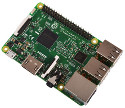
- The most popular Linux hacker board for years has been eclipsed by its new 3+ sibling
- Company/project — Raspberry Pi Foundation
- LinuxGizmos report
- Product page
- Processor — Broadcom BCM2837 (4x Cortex-53 @ 1.2GHz); Broadcom VideoCore IV GPU @ 400MHz
- Memory — 1GB SDRAM
- Price — $34
The Model 3 dominated the hacker board market for years until it was eclipsed by the RPi 3B+. Recently, Ameridroid launched promotional $34 price for the typically $35 board that includes a free 16GB microSD card pre-loaded with NOOBS. Most RPi imitators are more open source than the RPi 3, which like its siblings does not provide complete schematics. Yet, the Pi boards offer guaranteed Raspberry Pi add-on compatibility, the widest range of software support, and membership in a thriving community. The largely open source VideoCore CPU adds to the RPi 3’s reputation as a good choice for video applications. You can also buy a Raspberry Pi Model B 2 v1.2 for $35, but with a slower, 900MHz quad -A53 Broadcom SoC and no WiFi or Bluetooth.
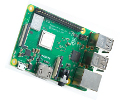
- RPi 3 upgrade offers faster CPU, WiFi, and GbE with PoE
- Company/project — Raspberry Pi Foundation
- LinuxGizmos report
- Product page
- Processor — Broadcom BCM2837B0 (4x Cortex-53 @ 1.4GHz); Broadcom VideoCore IV GPU @ 400MHz
- Memory — 1GB LPDDR2 RAM
- Price — $35
The Raspberry Pi 3 Model B+, which was the runaway leader of our June 2018 SBC reader survey, has the same price and much the same layout and feature set of the RPi 3 Model B, but with both major and minor improvements. The 3B+ provides a faster, 1.4GHz Broadcom SoC and pre-certified, dual-band 802.11ac and Bluetooth 4.2. The LAN port has moved from a 10/100 port to a USB-powered, up to 300Mbps Gigabit Ethernet port, and there’s even a $20 Power-over-Ethernet POE HAT option. The initial PoE HAT had regulator problems, but RPi Trading offered a refund and a repaired model is now available. Other RPi 3B+ improvements include a better PMIC, a heat spreader, and 0 to 50°C support.
| Renegade Elite (Libre Computer Board ROC-RK3399-PC) |
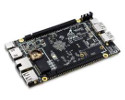
- RK3399 board with HDMI 2.0, 2x DP, and GbE with optional PoE
- Company/project — Libre Computer
- LinuxGizmos report
- Product page
- Processor – Rockchip RK3399(2x Cortex-A72 @ up to 2.0GHz, 4x Cortex-A53 at up to 1.5GHz); Mali-T860 GPU
- Memory — 4GB DDR4 RAM; opt. eMMC
- Price — $100
The Renegade Elite launched on Indiegogo last July, and although it did not meet its flexible funding goal, Libre Computer finally released the board and sells it for $100 on LoverPi as the Libre Computer Board ROC-RK3399-PC. Co-developed with Firefly and touted for its excellent mainline Linux support, the 120 x 72 x 11.9mm Renegade Elite is a bit more affordable than most RK3399 boards. This update to the Rockchip RK3328 powered Firefly-ROC-RK3328-CC (Renegade) offers all the high-end features you’d expect from an RK3399 board and more. You get 4GB RAM, HDMI 2.0, and 2x USB Type-C ports with DP support. Standout features include a GbE port with optional Power-over-Ethernet, as well as dual 60-pin expansion headers, with the high-speed connector supporting PCIe x4 2.1.

- Upgraded far-field voice control SBC with 6x mic array and a 16-meter wake-word range
- Company/project — Seeed
- LinuxGizmos report
- Product page
- Processor — Rockchip RK3229 (4x Cortex-A7 @ up to 1.5GHz); Mali-400MP
- Memory — 1GB DDR3 RAM; 4GB eMMC
- Price — $99
A year ago, Seeed upgraded its original ReSpeaker far-field voice control board with a v.2.0 model that moved from running OpenWrt on a single-core MIPS CPU to running Debian on a quad -A7 RK3229 SoC. The RK3229 is implemented along with 1GB DDR3 via an “Axol Core” module. The hexagonal ReSpeaker v2.0 features a 6x mic array with 8-channel ADC and a 16-meter wake-word range. Unlike the original, audio is processed directly on the RK3229 with a mix of open source and proprietary algorithms, and you get 3.5mm and JST 2.0 audio outputs. Other features include 4GB eMMC, a microSD slot, a fast Ethernet port, and WiFi/BT. You also get HDMI 2.0, 2x USB 2.0, and micro-USB OTG and device ports plus GPIO and Grove expansion. The ReSpeaker has some new competition in an open-spec, Allwinner backed Hichips-Parrot mic array board SBC, which only costs $80, but is disqualified here for its 10+ minimum purchase requirement.

- Sitara based board with dual 40-pin expansion connectors
- Company/project — MYIR
- LinuxGizmos report
- Product page
- Processor — TI AM437x (1x Cortex-A9 core @ up to 1GHz); PowerVR SGX530 GPU
- Memory — 512MB DDR3 RAM (alternatively 256MB or 1GB); 4GB eMMC
- Price — $99 ($139 for full kit with cables etc.)
MYIR’s open-spec, 100 x 65mm Rico Board taps TI’s single-core, Cortex-A9, Sitara AM437x SoC. The SBC integrates HDMI, GbE, and dual USB ports, as well as a 24-bit LCD interface that supports optional 7-inch touchscreens. You also get camera interfaces and dual 40-pin expansion connectors with support for CAN and industrial I/O. There’s no organized open source community, but you get schematics and detailed documentation.

- RPi 3 lookalike adds USB 3.0, bootable storage, and 4K-ready HDMI 2.0
- Company/project — Pine64
- LinuxGizmos report
- Product page
- Processor — Rockchip RK3328 (4x Cortex-A53 @ 1.5GHz); Mali-450 MP2 GPU
- Memory — 1GB, 2GB, or 4GB DDR3L; empty eMMC slot
- Price — $24.95 (1GB), $34.95 (2GB), or $44.95 (4GB)
Like the Firefly-ROC-RK3328-CC SBC (AKA Libre Computer’s Renegade), Pine64’s Rock64 combines Rockchip’s mid-range, quad -A53 RK3328 with a Raspberry Pi like 85 x 56mm footprint and expansion. The Rock64 lacks the RPi 3’s WiFi/BT module, except for optional, $7 to $22 USB dongle, and you won’t find any DSI and CSI interfaces. In addition, it only has 3x USB ports instead of four. However, one of those three is a faster USB 3.0 port and another is an OTG port. The microSD slot and empty eMMC socket are bootable, and you get a GbE port and HDMI 2.0 port with 4K HDR support. Options include $8 or $13 enclosures, a variety of $9 power supplies, and a $15 audio DAC board. OS support includes Android 7.1 and Linux distros including Debian, Armbian, Bionic, and more.

- This Raspberry Pi lookalike is the cheapest RK3399 board yet
- Company/project — Radxa
- LinuxGizmos report
- Product page
- Processor — Rockchip RK3399 (2x Cortex-A72 @ up to 1.8GHz, 4x Cortex-A53 @ 1.4GHz); Mali-T864 GPU
- Memory – 1GB, 2GB, or 4GB LPDDR4; empty eMMC slot
- Price — $39 (1GB) to $74.95 (4GB with WiFi/BT)
Selling for $39 at Allnet China (or $74 at Innet24 in Germany), the Rock Pi beats the $50 NanoPi Neo4 as the most affordable 1GB-RAM RK3399 SBC around, and its $57 2GB model edges out the 2GB, $60 RockPro64. There’s an A model without WiFi/BT and a B model with. Each model offers 1GB, 2GB, 4GB RAM configurations, and each is optionally available in a “Performance Set” kit version with a power adapter, case, heatsink, and USB cable. Like the RK3399-based NanoPi M4, the Rock Pi 4 closely matches the Raspberry Pi layout and feature set, including the 40-pin connector. There’s a native GbE port that is claimed to work with the Raspberry Pi PoE HAT. Unlike the NanoPi M4, it adds an M.2 slot for NVMe SSDs, but it lacks the M4’s additional 24-pin GPIO interface. You get a pair each of USB 3.0 and 2.0 ports and a 4K-ready HDMI 2.0 port in addition to 2-lane MIPI-DSI and -CSI. Other features include an audio jack with mic, an RTC, and a USB Type-C port for power. The SBC has a 0 to 80°C range, a 5.5-20V input, and support for Android 9.0. Debian, and Ubuntu Server.

- One of the most affordable RK3399 SBC has loads of media links and a full-size PCIe x4 slot.
- Company/project — Pine64
- LinuxGizmos report
- Product page
- Processor — Rockchip RK3399 (2x Cortex-A72 @ up to 1.8GHz, 4x Cortex-A53 @ 1.4GHz); Mali-T864 GPU
- Memory — 2GB or 4GB LPDDR4; empty eMMC slot
- Price — $60 (2GB) or $80 (4GB)
The RockPro64 is one of the most affordable RK3399 boards around and stands out with its full-size PCIe x4 expansion slot. The RockPro64 has the same 127 x 79mm dimensions and many of the same features found on the Allwinner H6 based Pine H64. You get HDMI, MIPI-DSI, eDP, 2x MIPI-CSI, Parallel camera, USB 3.0, 2x USB 2.0, and DisplayPort 1.2 via USB Type-C. For communications, there’s a GbE port and optional, $16 WiFi-ac with Bluetooth 4.1. MicroSD. audio links are available along with a 40-pin RPi-style connector. There’s support for Android 8.1, Ubuntu, Arch, and Debian.

- First 96Boards RK3399 SBC offers HDMI 2.0, DP, and optional M.2 NVMe storage
- Company/project — Vamrs
- LinuxGizmos report
- Product page
- Processor — Rockchip RK3399 (2x Cortex-A72 @ up to 1.8GHz, 4x Cortex-A53 @ up to 1.4GHz); Mali-T860 GPU
- Memory – 2GB or 4GB LPDDR3 RAM; 16GB or 32GBeMMC
- Price — $99 (Model A with 2GB/16GB) or $139 (Model B with 4GB/32GB)
Last September, the delayed Rock960 appeared as the heir apparent to Vamrs’ larger, pricier Rockchip RK3399 Sapphire SBC, which is unavailable. The 85 x 55mm Rock960 provides the usual 96Boards low- and high-speed connectors, as well as HDMI 2.0 and DP support via USB Type-C OTG. The SBC provides USB 3.0 and 2.0 ports, MIPI-DSI and -CSI, and an NVMe-ready M.2 M-key slot via an optional $10 adapter. The 8-18V board supports Android 7.1 AOSP, Debian, Ubuntu, Fedora, LibreELEC, Lakka, and FlintOS, among others. In January, Vamrs announced a feature-reduced “Model C” version of the Rock960 (see below), and it collaborated with Rockchip on a larger Toybrick RK3399Pro with the same AI-enhanced RK3399Pro SoC due to arrive soon on the Khadas Edge-1S. The Toybrick exceeds our $200 limit, selling for $249 with 3GB/16GB and a rich set of features, including 4x PCIe lanes and a mini-PCIe slot. This appears to have replaced the previously tipped 96Boards EE compatible Rock960 Enterprise Edition “Ficus” board, which has yet to reach market. In April, Linaro and Beiquicloud announced an RK3399Pro-based TB-96AI module along with a carrier board, but the combo costs well over our $200 limit on Taobao. The module debuts a new 96Boards Compute Module spec along with an RK1808-based TB-96AIoT module that uses the same carrier, which is also over our limit.

- Stripped-down Rock960 variant subtracts the eMMC, DP-ready Type-C, and 2×2 MIMO
- Company/project — Vamrs
- LinuxGizmos report
- Product page
- Processor — Rockchip RK3399 (2x Cortex-A72 @ up to 1.8GHz, 4x Cortex-A53 @ up to 1.4GHz); Mali-T860 GPU
- Memory – 2GB or 4GB LPDDR4 RAM; empty eMMC socket
- Price — $69 (1GB); $79 (2GB); $99 (4GB)
In January, Vamrs announced a lower-cost version of its Rock960 called the Model C. The 96 Boards CE compatible board adds a 1GB configuration and boosts RAM to LPDDR4 but has an empty eMMC socket instead of 16GB or 32GB eMMC on the Models A and B, respectively. The USB 3.0 Type-C port with DP support has switched to a USB 2.0 Type-C without DP, leaving you only the HDMI 2.0 port. Finally, it uses a slower, lower-cost version of the dual-band 802.11ac module without 2×2 MIMO. Otherwise, it’s all the same, including the optional M.2 adapter with NVMe support. Vamrs sells the board from the link above, although it’s currently out of stock at Seeed.

- Company/project — Newark Element14, Microchips
- Developer board for Microchip’s SAMA5D4 SoC offers partial Arduino compatibility
- LinuxGizmos report
- Product page
- Processor — Atmel SAMA5D4 (1x Cortex-A5 @ 528MHz)
- Memory — 512MB DDR2 RAM; 512MB NAND flash
- Price — $149.38
The SAMA5D4 Xplained Ultra is a collaboration between Microchip’s Linux4SAM developer site and Newark Element14. The Linux-ready, IoT-focused SBC showcases Microchip’s SAMA5D4 SoC, which like the earlier SAMA5D3 is limited to a single Cortex-A5 core. The SAMA5D4 adds NEON, L2 cache, and security features, and several models support 720p video. The 138 x 88mm Xplained board ships with 512MB each of RAM and NAND flash, and offers partial Arduino compatibility. You also get HDMI, Fast Ethernet, and three USB ports.

- One of the last available Linux-driven Arduino clones
- Company/project — SeeedStudio
- LinuxGizmos report
- Product page
- Processor — Qualcomm Atheros AR9331 (1x MIPS 24kc @ 400MHz); Atmel ATmega32u4 MCU @ 16MHz
- Memory — 64MB RAM; 16MB flash; 32KB flash for MCU
- Price — $49.95
Seeed’s Seeeduino Cloud, which has dropped in price by $20 since January, is a clone of the rebooted Arduino Yun (see farther above). It’s also one of the few Linux-ready SBCs with full Arduino compatibility remaining on the market. The Cloud is a variation on its earlier Seeeduino Arduino clone, and similarly adds Arduino support and the ability to connect the company’s Grove sensor and I/O add-ons. By integrating Dragino’s HE computer-on-module, the Seeeduino Cloud provides a Yun-like Atheros AR9331 WiFi subsystem that runs OpenWrt Linux. Other features include 10/100 Ethernet, USB host, micro-USB, 20x DIO pins, 7x PWM channels, and 12x analog inputs. Like the Seeeduino, the Seeeduino Cloud eases the interface between Arduino firmware and complex web services, in this case via a YunBridge library.

- RPi 3 pseudo clone has a quad -A17 Rockchip SoC with Mali T760 GPU
- Company/project — Asus
- LinuxGizmos report
- Product page
- Processor — Rockchip RK3288 (4x Cortex-A17 @ 1.8GHz); Mali-T760 GPU
- Memory — 2GB LPDDR3 RAM; 16GB eMMC
- Price — $82
Asus’ popular Tinker Board is still the only open spec hacker SBC from a major PC manufacturer. The original was replaced with a pricier Tinker Board S that added 16GB eMMC, HDMI-CEC support, a smart audio jack, and improved power management. Like the original, the S model offers a Raspberry Pi style size, layout, feature set, and 40-pin connector. Compared to the RPi 3 B+, the SBC has a faster, although 32-bit, processor with a more powerful Mali T760 GPU with upscaled 4K/30fps playback and twice the RAM. The SBC is equipped with WiFi, BT 4.0, a GbE port, and 4x USB 2.0 ports. You also get microSD, micro-USB, HDMI, MIPI-CSI, and MIPI-DSI. A community site is available with a forum, schematics, and other resources. In addition to Asus’ homegrown, Debian- and LXDE-based TinkerOS, there’s an Android image available. The SBC is available at B&H Photo and Amazon. Asus recently unveiled upcoming Tinker Edge S and more industrial CR1S-CM-A boards based on the i.MX8M and Edge TPU equipped Google Coral SOM, as well as an RK3399Pro based Tinker Edge R.
| Tritium (Libre Computer Board ALL-H3-CC) |

- RPi lookalike comes with choice of three Allwinner SoCs
- Company/project — Libre Computer
- LinuxGizmos report
- Product page
- Processor – Allwinner H2+, H3, or H5 — 4x Cortex-A7 (H2+/H3) -A53 (H5) cores with Mali-400 MP2 (H2+/H3) or Mali-450 MP2 (H5)
- Memory — 512MB, 1GB, or 2GB DDR3 RAM; empty eMMC socket with optional $20 16GB
- Price — $20 (H2+ with 512MB), $25 (H3 with 1GB), or $35 (H5 with 2GB)
Libre Computer, which makes Le Potato, Renegade Elite, and other SBCs fulfilled its Kickstarter orders for its Tritium (Libre Computer Board ALL-H3-CC) and is now selling it on Amazon, or for $5 more, on LoverPi. The Tritium runs Ubuntu 16.04 or Android 7.1 on a choice of Allwinner H2+ (quad -A7 with HD resolution), H3 (quad -A7 with 4K), or H5 (quad -A53 with 4K). Like Le Potato, the Tritium has a Raspberry Pi 3-like form factor, layout, and 40-pin expansion interface. The only difference we can see is the addition of an IR receiver. OS support includes Android 7, Ubuntu 18.04 LTS, Debian 9 Stretch, Armbian, and Raspbian. Options include 16GB eMMC ($20) and a $7 heatsink.
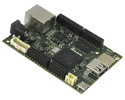
- Compact, i.MX6 SoloX board taps Cortex-M4 for Arduino compatibility
- Company/project — Udoo (Seco)
- LinuxGizmos report
- Product page
- Processor — NXP i.MX6 SoloX (1x Cortex-A9 @ 1GHz); Cortex-M4 MCU; Vivante GPU
- Memory — 512MB DDR3L RAM (1GB on Plus version)
- Price — $49.90 (Basic) $59.90 (Extended), $64.90 (Full)
Like the larger Udoo Quad/Dual SBCs, the IoT-focused, 85 x 59mm Udoo Neo runs Linux or Android on a Cortex-A9 based i.MX6. The Neo, however, is optimized for the single-core i.MX6 SoloX variant and taps its Cortex-M4 MCU to mimic an Arduino. The specs differ slightly from the Kickstarter package referenced in the LinuxGizmos link above. The Udoo Neo Basic provides Ethernet, microSD, USB host, micro-USB OTG, micro-HDMI, LVDS with touch, and a Parallel camera interface. There’s also an Arduino connector, as well as GPIO, UART, CAN, PWM, I2C, and SPI interfaces. For $10 more, the Neo Extended bumps the RAM to 1GB, adds 3-axis motion sensors, and replaces Ethernet with a WiFi/Bluetooth module. The Neo Full, which continues to be out of stock but has a notification sign-up button, is identical to the Extended but offers both Ethernet and wireless.
| Udoo Quad / Dual / Dual Basic |
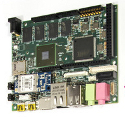
- Arduino compatible i.MX6 SBC supplies WiFi and GbE on most models and SATA on the Quad version
- Company/project — Udoo (Seco)
- LinuxGizmos report
- Product page
- Processor — NXP i.MX6 Quad or DualLite (4x or 2x Cortex-A9 @ 1GHz with Vivante GPUs); Atmel SAM3X8E Cortex-M3 MCU
- Memory — 1GB DDR3 RAM
- Price — $99 (Dual Basic); $115 (Dual); $135 (Quad)
Seco’s Udoo project offers three SKUs for its flagship, 110 x 85mm Udoo SBC. The Udoo Dual Basic and Udoo Dual provide the dual-core i.MX6 DualLite while the Quad has the quad-core i.MX6 with a higher-end Vivante GPU. All three boards integrate a Cortex-M3 based Arduino Due subsystem. The boards offer microSD, HDMI, LVDS with touch, audio, and CSI connections. You also get dual USB host and dual micro-USB ports, one of which is OTG. There are 76 GPIO pins in addition to the Arduino interface. The Udoo Dual adds WiFi and GbE connections, and the Quad also adds SATA.

- High-end Intel Braswell based board has M.2 and SATA III
- Company/project — Udoo (Seco)
- LinuxGizmos report
- Product page
- Processor — Intel Braswell quad-core SoCs (Advanced Plus: Celeron N3160 @ up to 2.24GHz; Ultra: Pentium N3710 @ up to 2.56GHz); Intel Gen 8-LP GPU
- Memory — 4GB (Advanced Plus) or 8GB (Ultra) DDR3L RAM; 32GB eMMC on Advanced Plus and Ultra
- Price — Advanced Plus $174; Ultra $267
The Udoo X86 is one of the more fully open source entries among the small crop of under-$200 x86 hacker boards. Only the $174, Celeron N316 based Advanced Plus version is eligible under our $200 limit, and it’s currently out of stock, but the notification button suggests it should return soon. Although the Udoo X86’s Intel Braswell SoCs are several generations old, having been followed by Apollo Lake and Gemini Lake, they similarly use a 14nm process and have a low, 5-6W TDP. An extensive feature list includes M.2, GbE, SATA III, HDMI, 2x DP, wireless, and 20x GPIO. Other features include 3x USB 3.0 ports, analog and digital audio I/O, plus an RTC, IR, and an IMU. There are also loads of options, including a heatsink, case, cables, and an M.2-based dual Ethernet module. The 120 x 85mm board runs Linux, Android, and Windows 7/8.1/10. A year ago, Seco’s Udoo Project launched the Udoo Bolt hacker board on Kickstarter, featuring AMD’s x86-based Ryzen Embedded V1000 SoC. It’s currently on pre-order at Mouser, but starts at $332, well over our $200 limit.

- Intel Cherry Trail based Raspberry Pi lookalike offers GbE and up to 64GB eMMC
- Company/project — Aaeon; UP Community
- LinuxGizmos report
- Product page
- Processor — Intel Atom x5-Z8350 (4x Cherry Trail @ 1.44GHz/1.92GHz burst); Intel HD 400 Graphics
- Memory — 1GB, 2GB, or 4GB DDR3L RAM; 16GB, 32GB, or 64GB eMMC
- Price — $99 (1GB/16GB), $109 (2GB/16GB); $119 (2GB/32GB); $149 (4GB/32GB); $169 (4GB/64GB)
Like the later UP boards, the original UP is not backed up with full schematics. Yet, the UP Community now supplies far more extensive documentation, including some schematics, as well as open source downloads, tutorials and support. The UP board runs Ubuntu 16.04, Ubilinux 4.0 Beta 2, OpenBSD 2.0, or Windows 10/8.1 on a quad-core, 1.44GHz/1.92GHz Atom x5-Z8350 of the 14nm Cherry Trail generation. The 85.6 x 56.5mm board not only looks like a Raspberry Pi, but it provides a 40-pin expansion bus via an Altera MAX V CPLD that is said to provide RPi 2 compatibility. The UP is equipped with a GbE port, a USB 3.0 OTG port, 4x USB 2.0 ports, and two USB 2.0 headers. Other features include HDMI, DSI, CSI, I2S, and eDP. Accessories on all the UP boards include fans, enclosures, wireless kits, cameras, touchscreens, cables, UPS batteries, and more. Other Cherry Trail SBCs include the smaller Up Core and the much more affordable Atomic Pi.

- Smaller version of UP board with up to 4GB RAM, 64GB eMMC
- Company/project — Aaeon; UP Community
- LinuxGizmos report
- Product page
- Processor — Intel Atom x5-Z8350 (4x Cherry Trail @ 1.44GHz/1.92GHz burst); Intel HD 400 Graphics
- Memory — 1GB, 2GB, or 4GB DDR3L RAM; 16GB, 32GB, or 64GB eMMC
- Price — $99 (1GB/16GB); $109 (2GB/16GB); $119 (2GB/32GB); $149 (4GB/32GB); $169 (4GB/64GB)
The UP Core, which began shipping to the public in Mar. 2018 after its 2017 Kickstarter launch, is a smaller, 66 x 56.5mm version of the UP board. It runs the same Linux and Windows software and offers a similar feature set except that you get WiFi and Bluetooth 4.0 BLE instead of a GbE port. The UP Core is limited to 2x USB 2.0 headers, compared to 4x coastline USB 2.0 ports and 2x USB headers on the UP board. Like the UP board, it also has single USB 3.0 and HDMI ports. Other features include dual MIPI-CSI, eDP, I2S audio, and a 100-pin docking connector with RPi HAT compatibility. The board has the same five configurations of RAM and eMMC as the UP board, with the same prices.

- Smaller version of UP board with up to 4GB RAM, 64GB eMMC
- Company/project — Aaeon; UP Community
- LinuxGizmos report
- Product page
- Processor — Intel Atom x5-E3930, x5-E3940, or x7-E3950(4x Apollo Lake @ 1.3GHz/1.8GHz, 1.6/1.8GHz, and 1.6/2.0GHz); Intel HD Graphics 500/505
- Memory — 2GB, 4GB, or 8GB DDR3L RAM; 32GB, 64GB, or 128GB eMMC
- Price — $149 (2GB/32GB, E3930); $209 (4GB/64GB, E3940); $289 (8GB/64GB, E3950); $329 (8GB/128GB)
A year ago, Aaeon launched an UP Core Plus SBC on Kickstarter as the centerpiece of an UP AI Edge family that includes optional, AI add-on boards. The family also includes a higher end UP Squared AI Vision Kit based on the UP Squared board, which like most of the UP Core Plus configurations is beyond our $200 limit. The 90 x 56.5mm UP Core Plus is larger than the Intel Cherry Trail based UP Core and has a choice of three quad-core “Apollo Lake” Atom SoCs. OS support is the same as the UP Core except that it also supports XenServer 7.2. The UP Core Plus is equipped with a DisplayPort, eDP, and 2x MIPI-CSI interfaces plus USB 3.0 host and OTG ports and 2x USB 2.0 ports. Dual 100-pin high speed GPIO connectors are compatible with UP board add-ons. There’s no Ethernet, but you get 802.11ac and Bluetooth, and there is a GbE port on the optional $49 high-speed I/O carrier board option. There’s also a $49 low-speed I/O carrier board add-on among the many other options including cooling systems, enclosures, mini-PCIe based 3G and LTE cards, and the UP AI Core module.
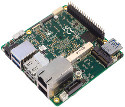
- High-end Apollo Lake SBC with mini-PCIe, M.2, SATA, and a pair each of GbE and HDMI
- Company/project — Aaeon; UP Community
- LinuxGizmos report
- Product page
- Processor — Intel Celeron N3350 (2x Apollo Lake @ 1.1GHz/2.4GHz) or Atom x5-E3940 (4x Apollo Lake @ 1.6GHz/1.8GHz); Pentium N4200 (4x Apollo Lake @ 1.1GHz/2.5GHz); Intel Gen9 HD 500/505 graphics; Altera Max 10 FPGA
- Memory — 2GB, 4GB, or 8GB LPDDR4; 32GB eMMC 5.0, expandable to 128GB
- Price — $149 (Celeron with 2GB/32GB), $179 (Celeron with 4GB/32GB), $199 (Atom x7-E3950 with 4GB/32GB); $239 (Pentium with 4GB/32GB), $239 (Atom x5-E3940 with 4GB/64GB); $249 (same config with Ubuntu/OpenVino); $299 (Pentium with 8GB/64GB); $309 (same config with Ubuntu/OpenVino); $339 (Pentium with 8GB/128GB)
The Up Squared shipped to Kickstarter backers in mid-2017 and is now a bit pricier — only a few models fit under our $200 limit, including one of the two new Atom x5-E3940 models. The lower-cost Celeron models have delayed shipments due to shortages. The 90 x 86mm UP Squared offers 4K encode and decode, dual GbE ports, dual HDMI outputs, and SATA, M.2, and mini-PCIe expansion. You also get eDP, dual MIPI-CSI, 3x USB host, a micro-USB 3.0 OTG port, and both a 60- and 40-pin GPIO tied to an Altera Max 10 FPGA. OS support is the same as on the UP Core Plus, and the extensive hardware options also appear to be similar. In March, Aaeon posted specs for an UP Xtreme board with an Intel 8th Gen Whiskey Lake-U CPU. Due to launch on Kickstarter later this month, the feature-rich Xtreme is likely to exceed our $200 limit.

- One of the earliest open-spec Linux hacker boards showcases the i.MX6
- Company/project — Wandboard.org; TechNexion
- LinuxGizmos report
- Product page
- Processor — NXP i.MX6 Solo, DualLite, or Quad (1x, 2x, or 4x Cortex-A9 @ 1GHz); Vivante GPU
- Memory — 512MB (Solo) 1GB (Dual), 2GB (Quad and QuadPlus) DDR3 RAM
- Price — $89 (Solo); $109 (Dual); $139 (Quad); $149 (QuadPlus)
The sandwich-style Wandboard was of the earliest community-backed Linux SBCs along with the BeagleBone and Raspberry Pi. The original Wandboard received a “Reload” update in early 2017 that added the i.MX6 QuadPlus as an alternative to the Quad model, bringing an improved Vivante GC2000+ GPU, an SPDIF audio interface, faster WiFi/BT, a new PMIC, and bug fixes. Features include dual microSD slots plus GbE, HDMI, camera, serial, USB, and USB OTG connections. The Dual lacks the Quad’s SATA connection, and the Solo also foregoes the WiFi and Bluetooth found on the Quad and Dual.

- Built on a Zynq FPGA SoC, this SBC has a CAN interface and onboard sensors.
- Company/project — MYIR
- LinuxGizmos report
- Product page
- Processor — Xilinx Zynq-7010 or -7020 (2x Cortex-A9 cores @ 667MHz, plus FPGA)
- Memory — 1GB DDR3 RAM
- Price — $99 (7010) or $119 (7020), incl. 4GB microSD card
The Z-turn Board, which spun off a Z-turn Lite model (see below), runs Linux on a choice of two Xilinx Zynq SoCs which combine dual Cortex-A9 cores with two FPGA choices: the Zynq-7010 (28K logic cells) or Zynq-7020 (85K). The 102 x 63mm SBC features HDMI, GbE, and dual mini-USB ports, as well as a CAN port and a variety of sensors, buzzers, switches, buttons, and LEDs. Dual 80-pin expansion connectors express the FPGA signals and can be configured as LVDS pairs. A $139 kit version adds a power adapter, cables, and a 4GB data card. For software, you get a customized Linux 3.15 BSP.

- Smaller, cheaper version of Z-turn, but with lower-end Zynq options
- Company/project — MYIR
- LinuxGizmos report
- Product page
- Processor — Xilinx Zynq-7007S or -7010 (1x or 2x Cortex-A9 cores @ 667MHz, plus FPGA)
- Memory — 512MB DDR3 RAM; 4GB eMMC
- Price — $69 (7010) or $75 (7020), incl. 4GB microSD card
This cheaper, smaller (91 x 63mm), stripped-down version of MYIR’s Z-turn board offers a different mix of ARM/FPGA Xilinx Zynq options. The previous low-end model — the Zynq-7010 (28K logic cells) — is the Lite model’s high end, and the new low end is the Zynq-7007S with 23K FPGA logic cells and only one Cortex-A9 core instead of two. RAM has been halved, but unlike the original Z-turn, you get 4GB eMMC in addition to the 4GB microSD card that ships with both boards. The Lite reduces the number of programmable I/O lines to 84 and omits features such as the HDMI and CAN ports, as well as temperature and motion sensors. MYIR also offers a $29, 91 x 63mm Z-turn Lite IO Cape designed specifically for the Lite that gives you a real-world HDMI port, as well as camera, LCD, Pmod, and GPIO interfaces. Note that Avnet recently launched an updated Ultra96-V2 96Boards CE with the 64-bit Zynq UltraScale+ MPSoC, but it starts at $249.


Commentaires
Laisser un commentaire